Recent Reports
Aithisgean ùra
Committee Reports
Aithisgean Chomataidh
Research Briefings
Brathan-ullachaidh Rannsachadh
Feedback
Ais-eòlas
Recent Reports
Aithisgean ùra
Committee Reports
Aithisgean Chomataidh
Research Briefings
Brathan-ullachaidh Rannsachadh
Feedback
Ais-eòlas
Published by The Scottish Parliamentary Corporate Body
Key Issues for Session 7
Author: SPICe Research and SPICe Data Visualisation Team
SHARE
PDF
Published: Tuesday 12 May 2026 (SB 26-25)
Expand
Overview
Report
Hide
Hide
Overview
Report
Foreword from the Clerk/Chief Executive
Welcome from SPICe Office Heads
Public Finances and Public Service Delivery
Follow the money - spending in Session 6 and the need for fiscal sustainability
Overview of the data – key trends and analysis
Looking ahead to Session 7
Scotland's devolved public sector workforce – a growing pressure point?
Size and composition of the devolved public workforce
Public sector pay
The Session 6 Scottish Government’s Public Service Reform Strategy
Artifical intelligence
Issues for Session 7
From Roads to Rails: How Infrastructure Is Funded
How is infrastructure funded?
Past choices: What has been invested?
Current Outlook
Future choices
Funding challenges: Can we prevent demand for reactive services?
The challenge facing public service delivery bodies
Preventative spending
How can we prevent problems before they arise?
Looking ahead to Session 7
NHS productivity and reform
Why the productivity paradox?
Time for change?
Conclusion
Provision of social care services
What is social care?
How are community health and social care funded?
Local government funding for social care
Pressures affecting social care provision
More on integration since 2016
What happened to the National Care Service?
Conclusion
Further and higher education - towards sustainability for colleges and universities
Laying the groundwork for change
Looking ahead to Session 7
School education and childcare: Priorities and pressures in Session 7
Ongoing reform of school education
Teachers’ contact time
Expanding publicly funded childcare
Additional support needs
Positive relationships, behaviour and mobile phones
Closing the poverty related attainment gap
Summary
Transport policy - your delivery has been delayed
Transport policy goals of Scottish Governments
Changes in Scottish travel trends
Conclusion
Living Standards and Wellbeing
Living standards and the cost of living
Scotland’s post-2008 economic performance
Scotland’s economy is on a lower growth trajectory
What this means for living standards
The cost of living
Why this matters for other policy areas
External shocks and their impact on Scotland’s politics and economy
How have recent external shocks impacted the Scottish economy?
The current conflict in the Middle East
What does this mean for Session 7?
Will Scotland's child poverty targets be met?
How many children in Scotland are in poverty?
Data changes make comparison difficult
The latest child poverty delivery plan sets out action to 2030
Most investment is in social security
UK Government child poverty plan
Further action needed
Conclusion
Legal aid – how close is meaningful reform?
What is legal aid?
The need for reform
How to deliver reform?
How to match supply with demand?
Which services should be covered?
How much to pay?
The Scottish Government’s reform priorities
What to look out for in Session 7
Rising disability prevalence
Disability prevalence is rising faster in Scotland than the UK average
Outcomes for disabled people
Fiscal implications of rising disability prevalence
Improving population health
Neurodiversity in Scotland: challenges for public policy
What is neurodiversity?
Waiting times
Scottish Parliament committee scrutiny during Session 6
Health, Social Care and Sport Committee
Equalities, Human Rights and Civil Justice Committee
Scottish Government approach
Issues to consider during Session 7
Approaches to palliative care policy
Palliative care provision in Scotland
Unmet palliative care needs
Legislative and policy context
Palliative care funding
Potential considerations for Session 7
Asylum policy and its impact on devolved issues
Devolution context
UK picture: numbers, routes, and backlog
Asylum accommodation
The picture in Scotland
Impact on homelessness and housing
What did the parties say in their manifestos?
Issues to consider for Session 7
Scotland’s Housing Emergency – an end in sight?
Why has a housing emergency been declared?
What are councils doing to address housing emergencies in their areas?
What did the Session 6 Scottish Government do in response to the housing emergency?
What’s been the impact and what next?
Conclusion
Environment, Natural Resources and Rural Affairs
The approach to net zero in Scotland
The pursuit of net zero in Session 7
Transport
Land use
Agriculture
Business and industry
Energy supply
Buildings
Net zero beyond emissions
Potential net zero developments in Session 7
Climate Change - Scotland's approach to adaptation and resilience
Global emissions and climate change overview
Climate change adaptation policy in Scotland
Climate change impacts in Scotland
Flooding
Extreme heat and water scarcity
Food Security
Potential Parliamentary focus during Session 7
Can the decline of nature be halted by 2030?
Nature is depleted - in Scotland and globally
The Session 6 response – a new ‘framework’ for tackling the nature emergency
The challenge for Session 7 – putting the framework to work
Where next for the Agricultural Reform Programme?
The story so far
The impact of agricultural reform on other policy areas
Key issue for Session 7 – putting the framework to work
The land reform jigsaw
What is land reform?
Session 6 – Land Reform Act
Session 6 – Community Right to Buy Review
What’s on the menu for Session 7?
Moving from a linear to a circular economy
Context – why is a linear economy harmful?
Progress so far
Session 6 developments - a framework for a circular economy
Session 7 – putting the framework to work
Crowded seas
Competing pressures
Marine spatial planning – an essential tool for managing competing pressures?
Looking ahead to Session 7
Devolution, the Parliament and Transparency
Scrutiny of how devolution operates
Intergovernmental activity
The UK Internal Market Act 2020 and the exclusions process linked to the UK Internal Market Act 2020
Common frameworks
Legislative consent - the Sewel Convention
UK Ministers’ delegated powers in devolved areas
The transparency challenge
Scotland’s constitutional future
Can the Scottish Parliament legislate for an independence referendum?
Are there other routes to independence?
The return of EU law?
The reset in UK-EU relations
Dynamic alignment
The EU Reset Bill
What might this mean for the Scottish Parliament?
The Scottish Parliament – developments in its procedures and standards
Committee size
Elected committee conveners
Gender balance
Review of the Complaints Sanctions Process
A possible Bill to introduce a recall mechanism for MSPs
Supreme Court ruling on the meaning of sex in the Equality Act 2010
The Supreme Court’s judgment and legal effect
Protection of trans people under the Equality Act
Why the ruling matters
Institutional responses and the guidance gap
Scottish Government response
The EHRC position and statutory guidance
UK Government position
Ongoing disputes and litigation
How things currently stand
Reform of the transparency landscape in Scotland
Previous progress on transparency reform
Freedom of information
Register of Interests
Lobbying transparency
Cross-cutting issues
Balance between openness and operational capacity
Public awareness
Data fragmentation
Priorities for Session 7
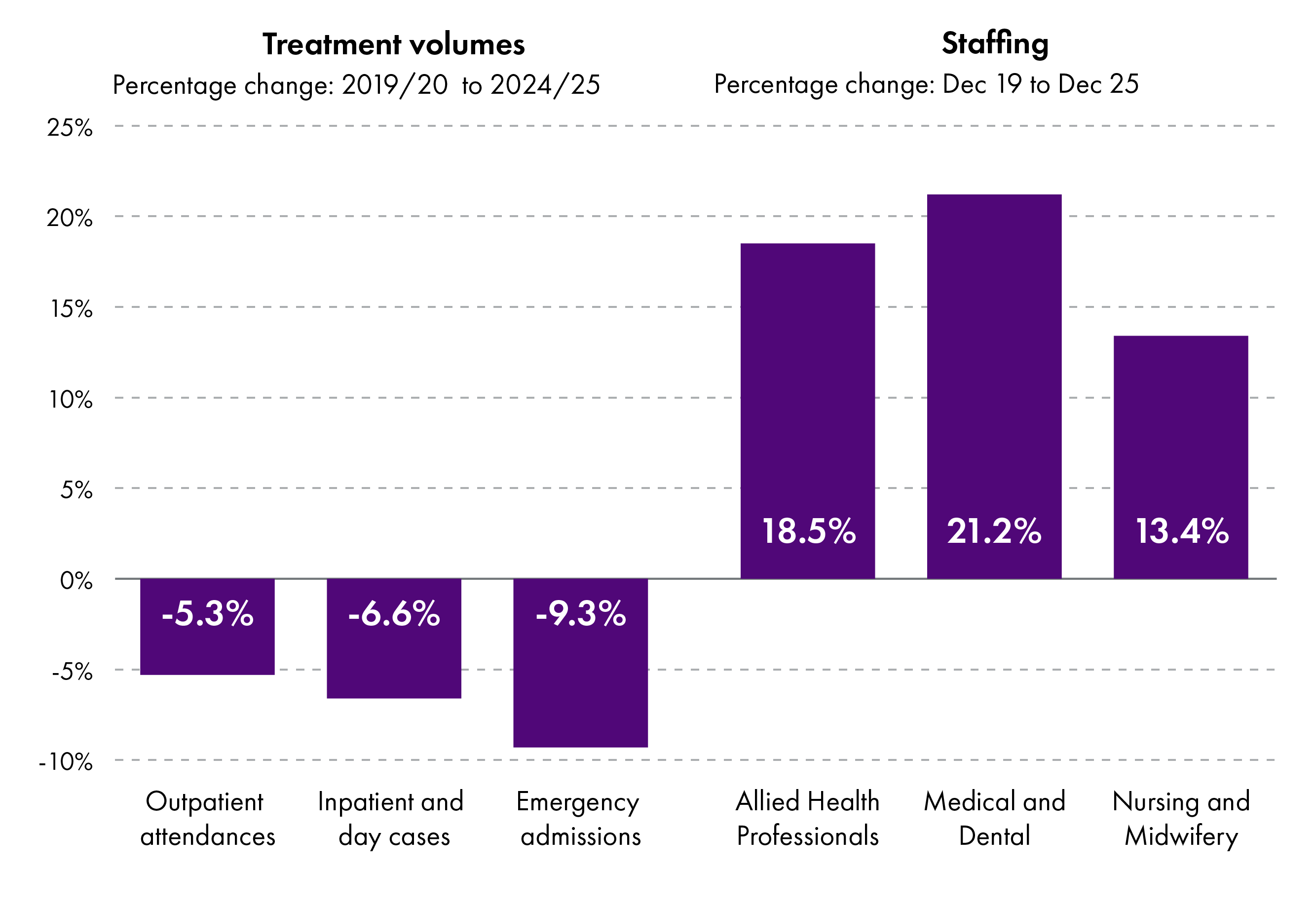
Image: Figure 12: Percentage change in key treatment volumes and NHS employed staff numbers (whole time equivalent) between 2019 and 2025
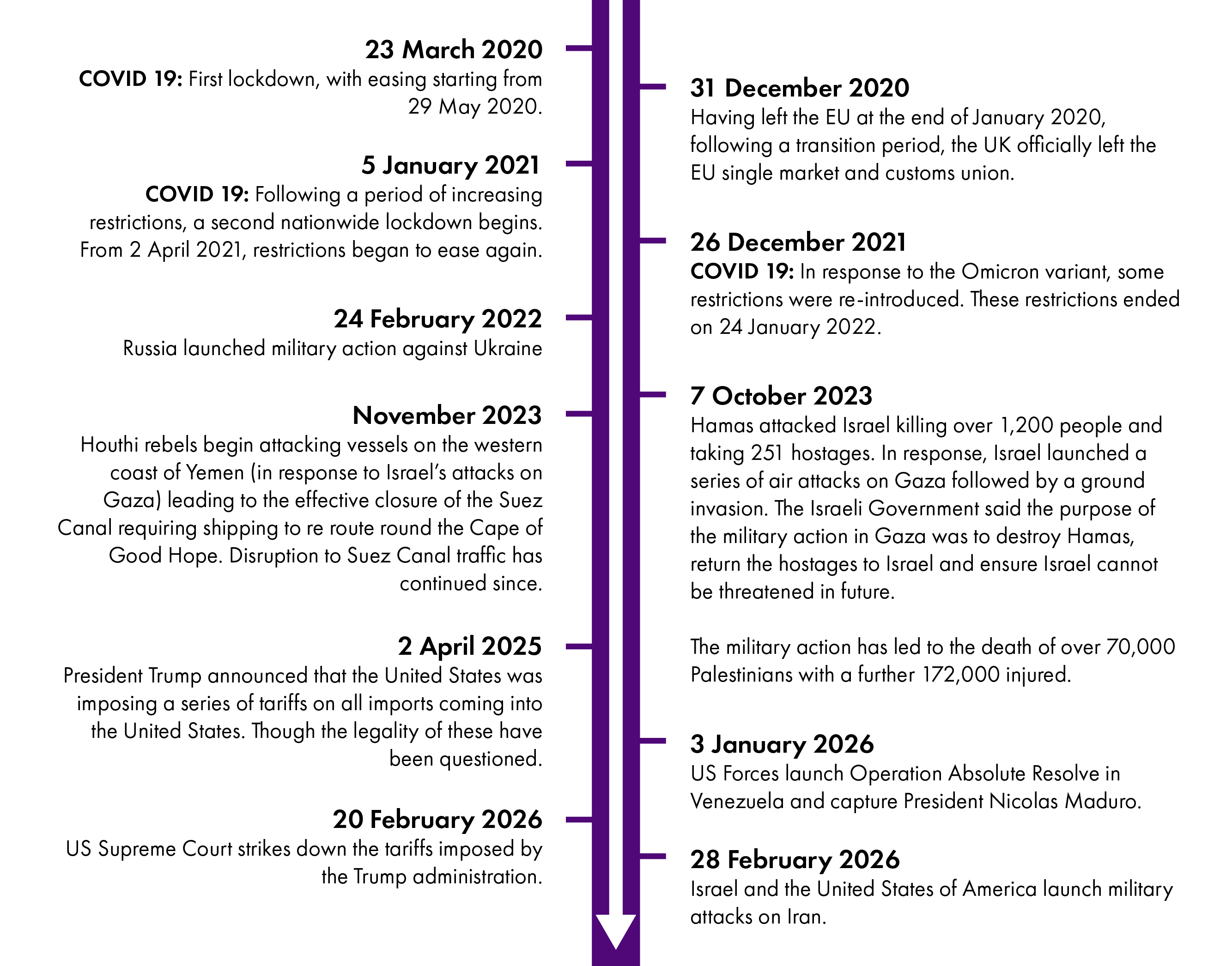
Image: Figure 23: Timeline of external shocks
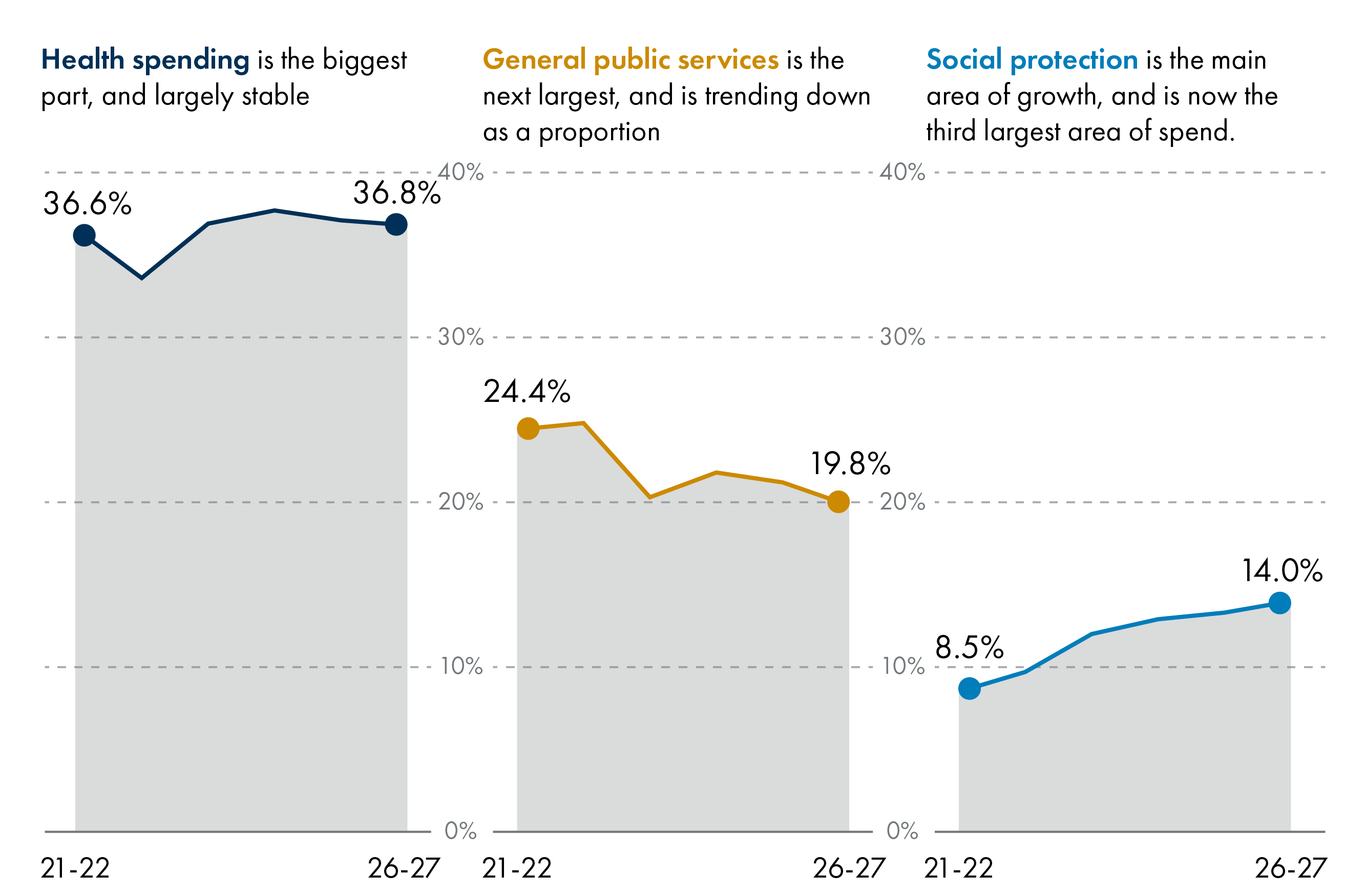
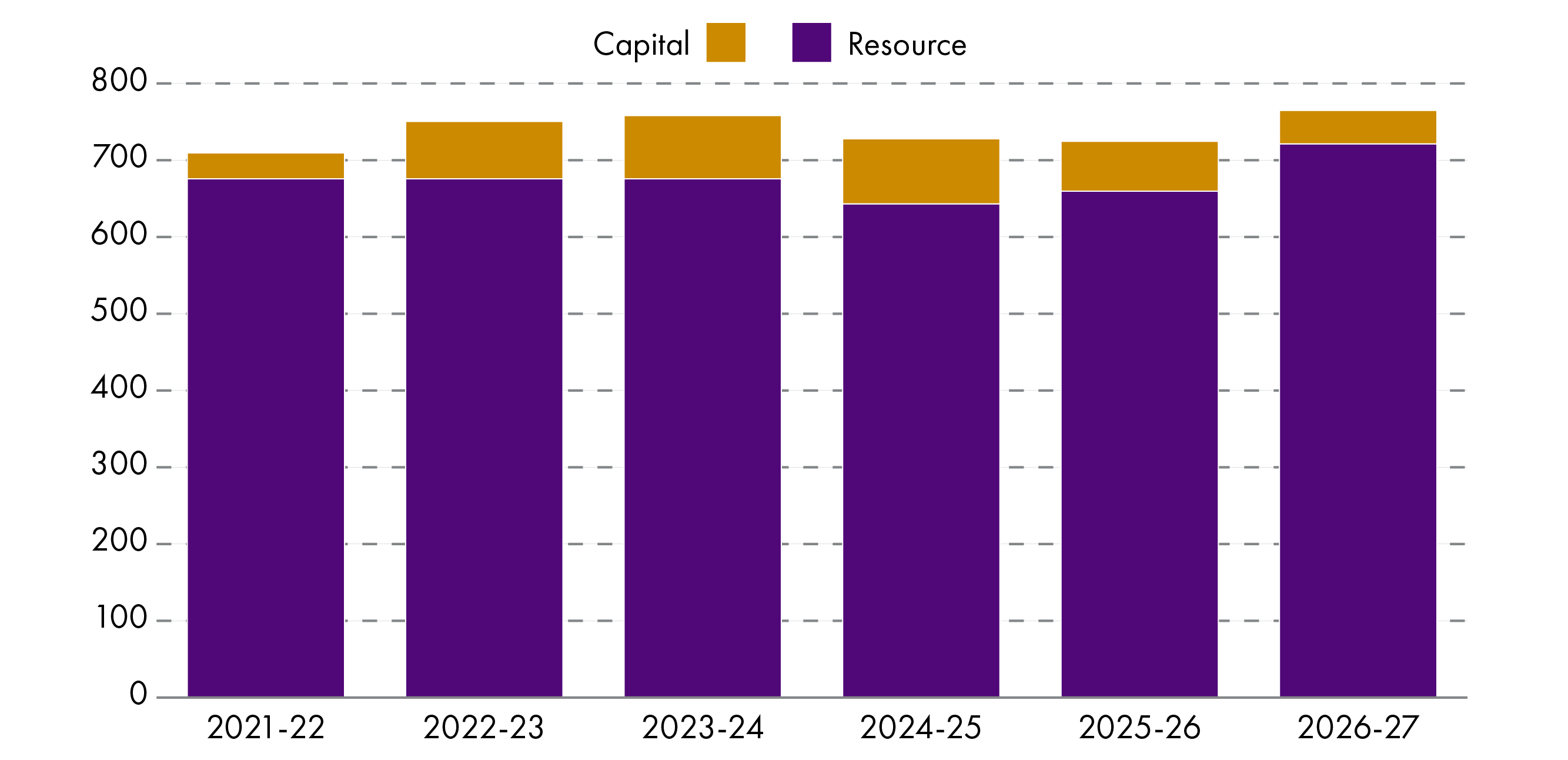
Image: Figure 1: Trends in resource and capital spending against COFOG classifications between 2021-22 and 2026-27
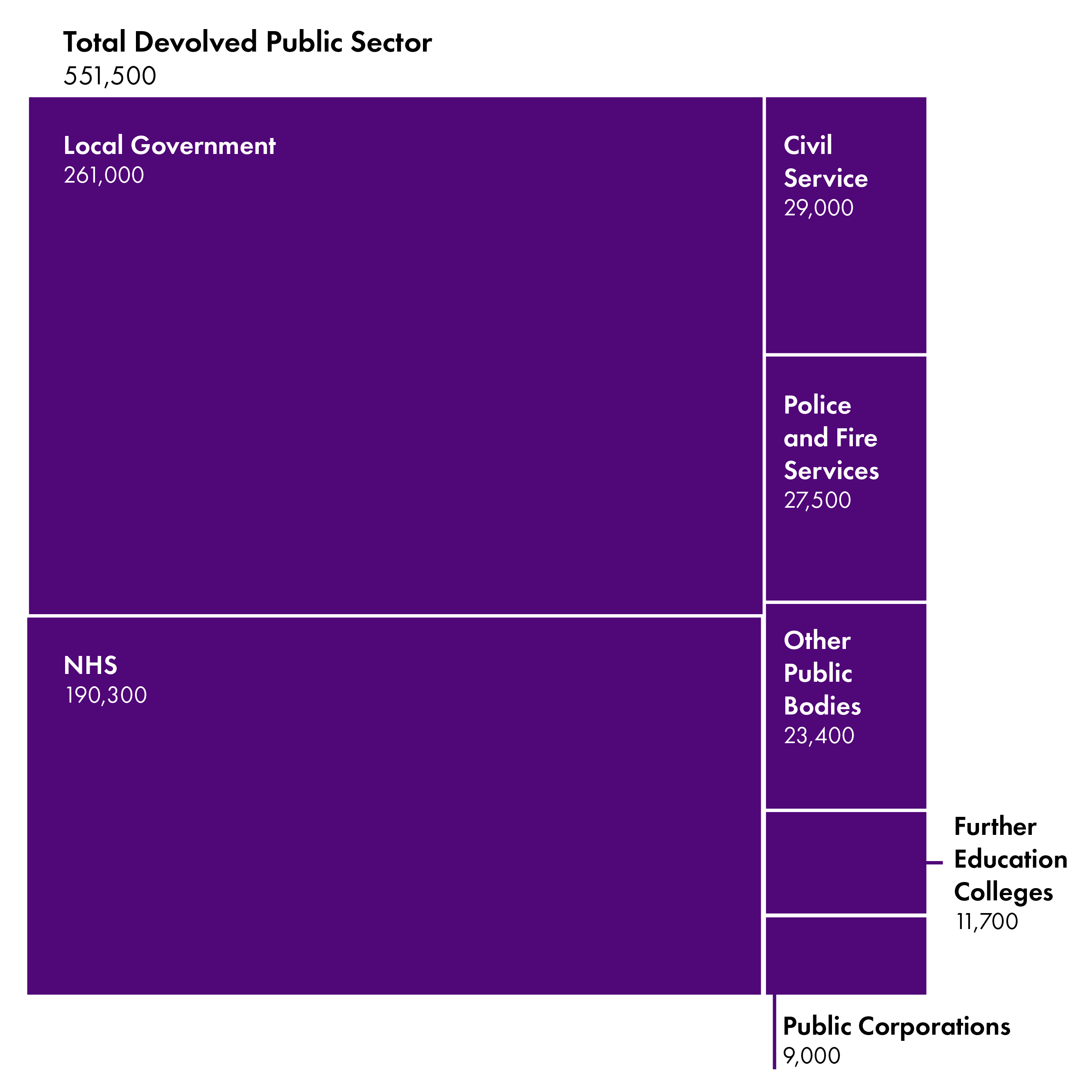
Image: Figure 2: Devolved public sector workforce by sector (headcount), quarter 4 2025
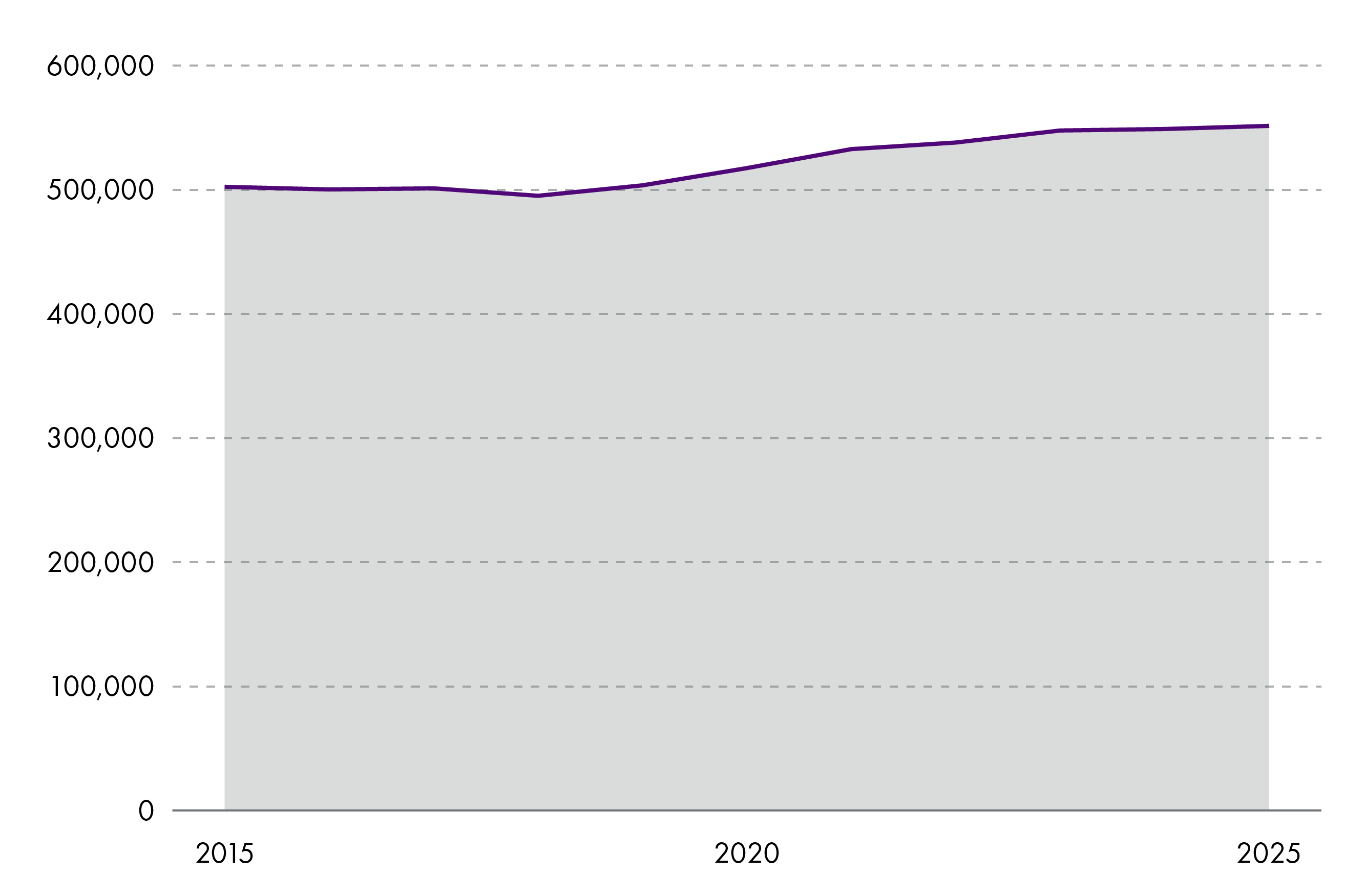
Image: Figure 3: Increase in devolved public sector headcount since 2015
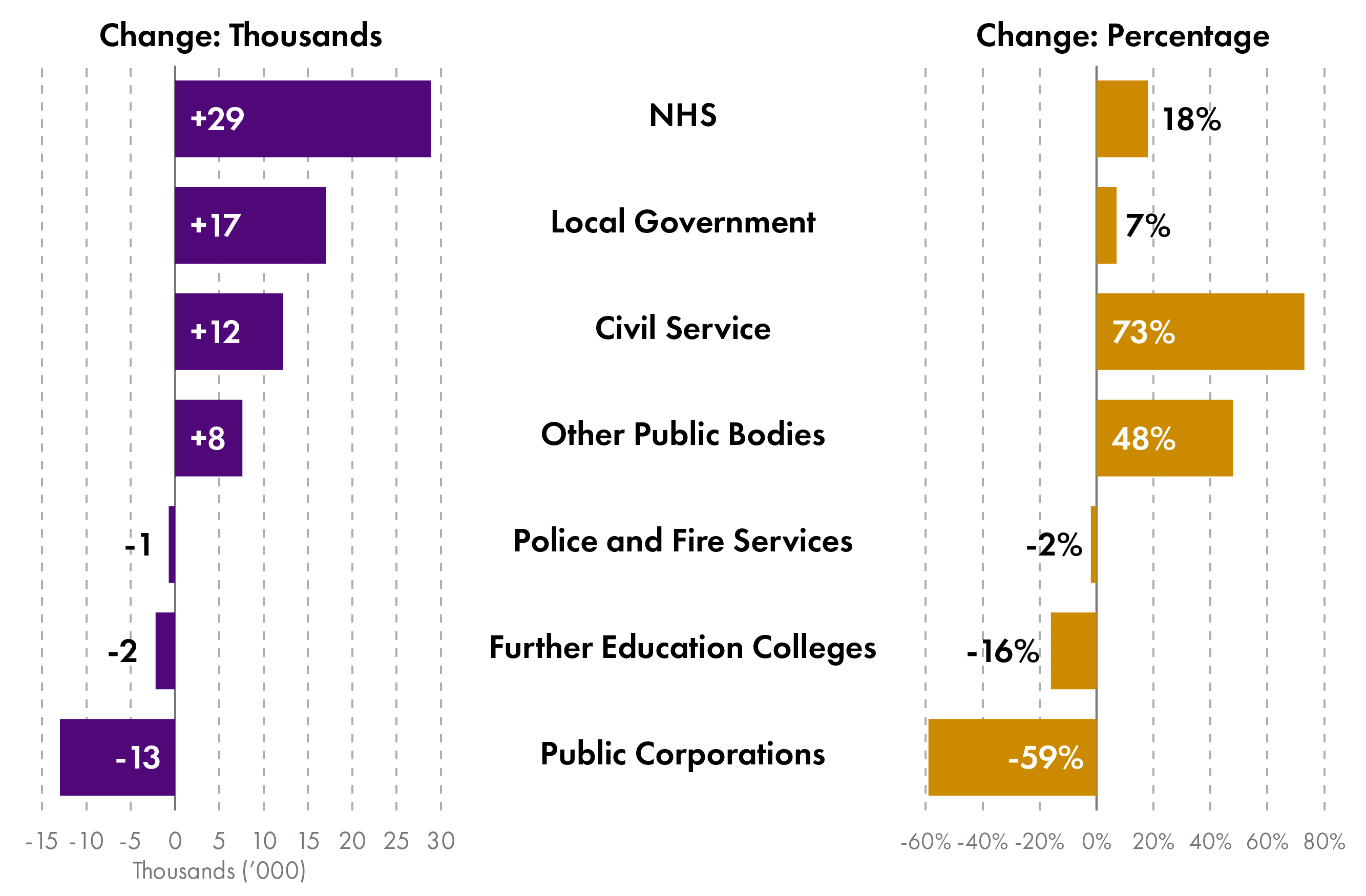
Image: Figure 4: Change in headcount since 2015 for main sectors of the devolved public sector
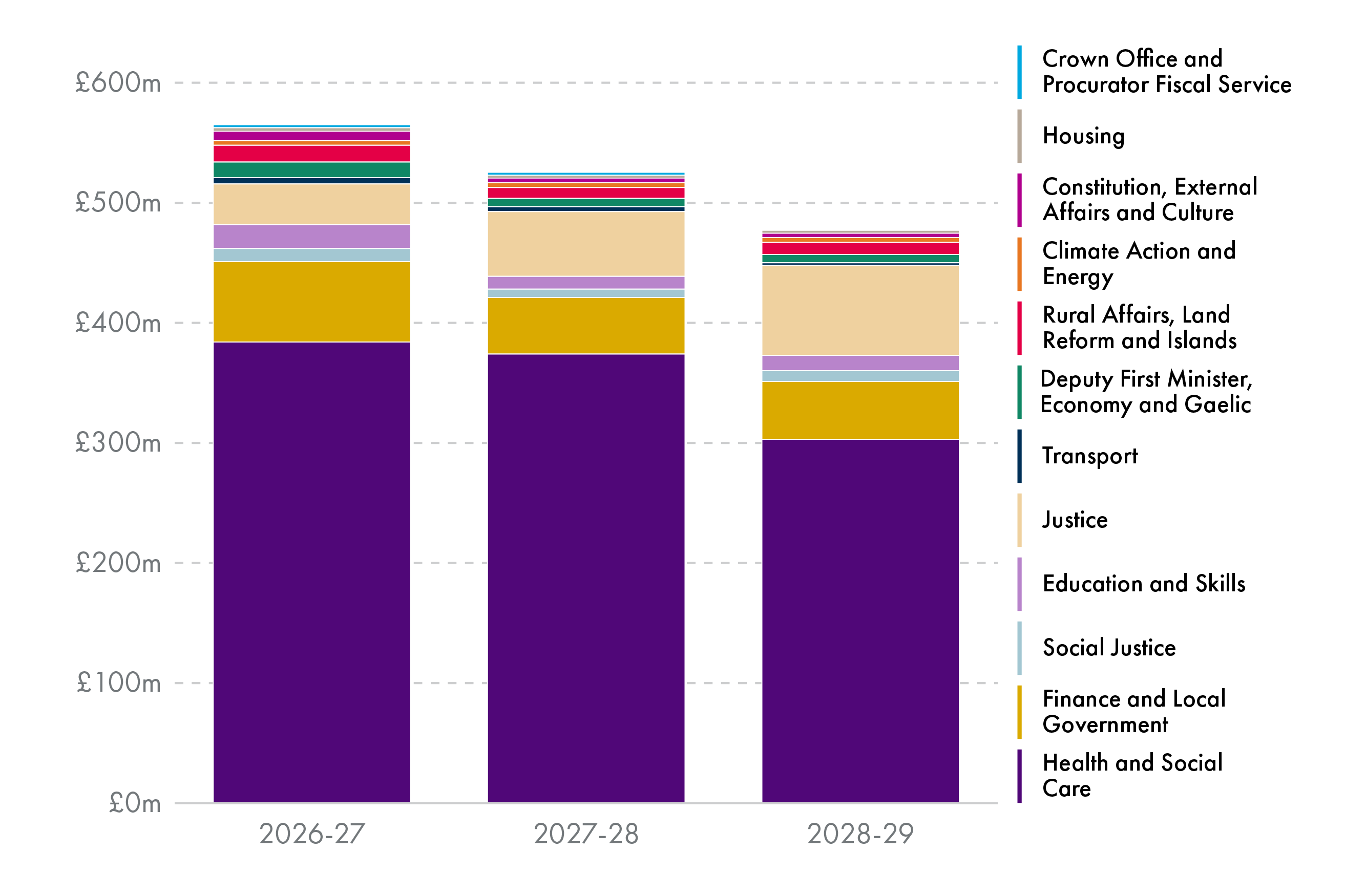
Image: Figure 5: Planned efficiencies and savings by portfolio area 2026-27 to 2028-29
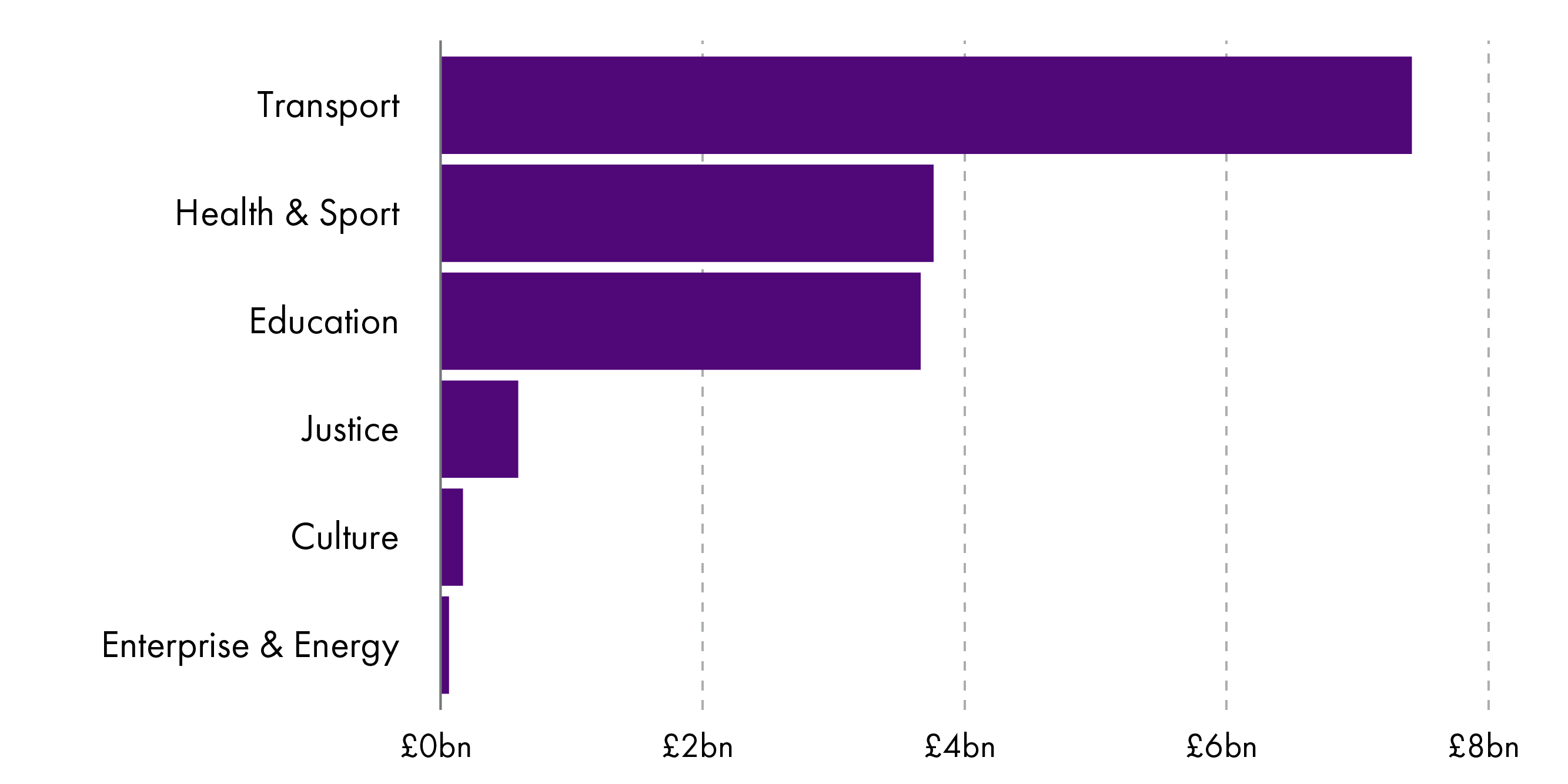
Image: Figure 6: Value of Scottish Government-led projects since 2007 as at August 2025, by sector
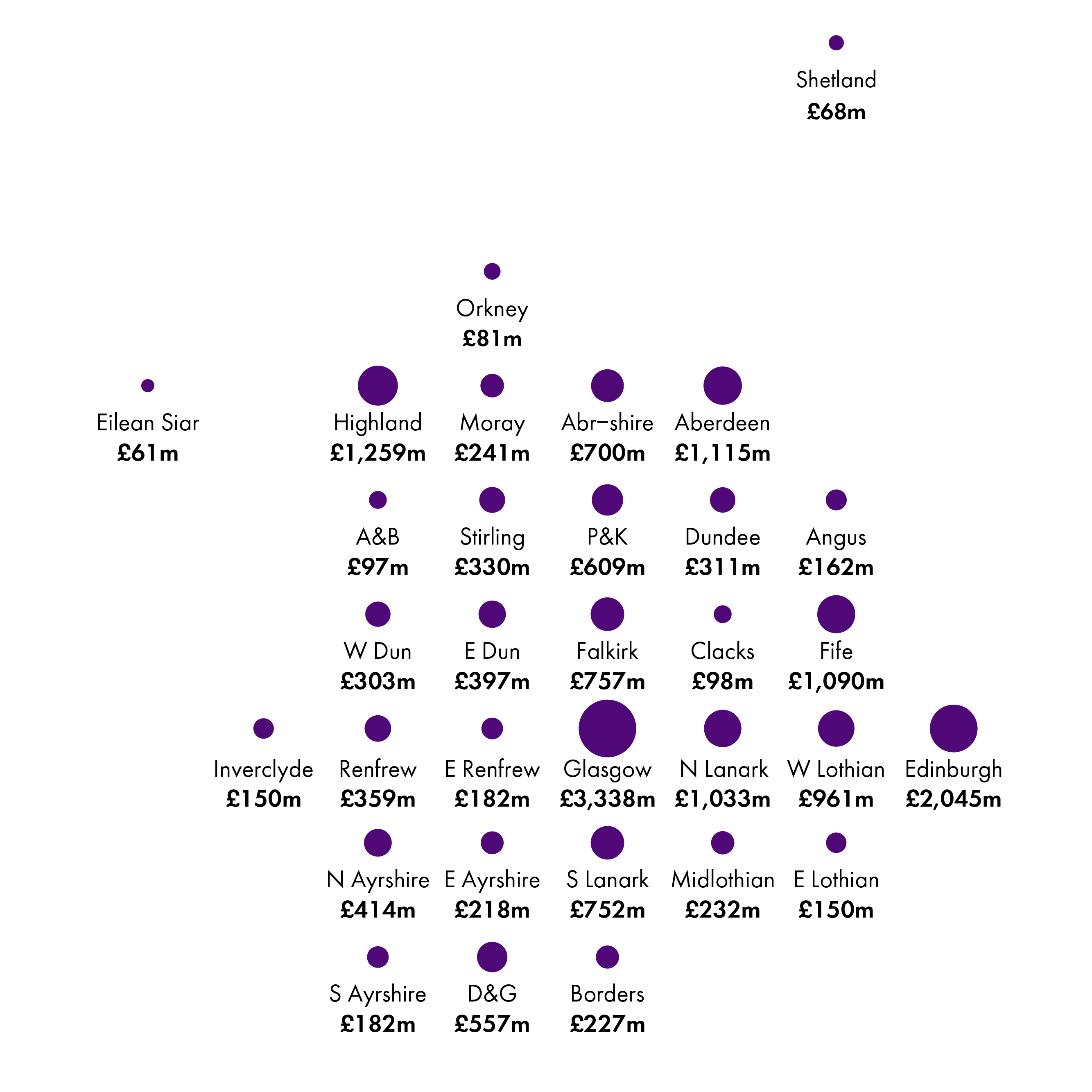
Image: Figure 7: Value of Scottish Government-led projects since 2007 as at August 2025 by local authority area
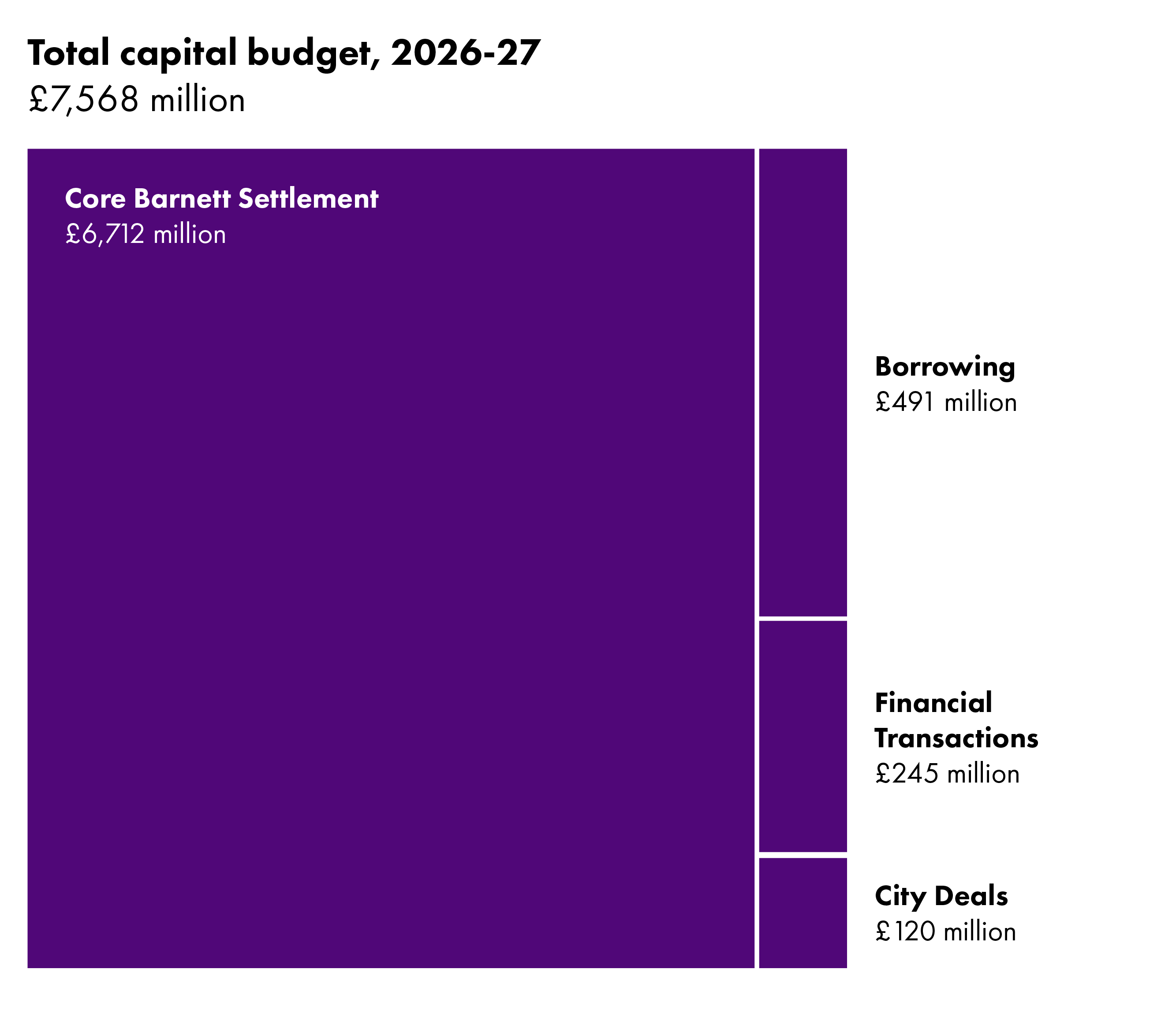
Image: Figure 8: Total capital budget, 2026-27
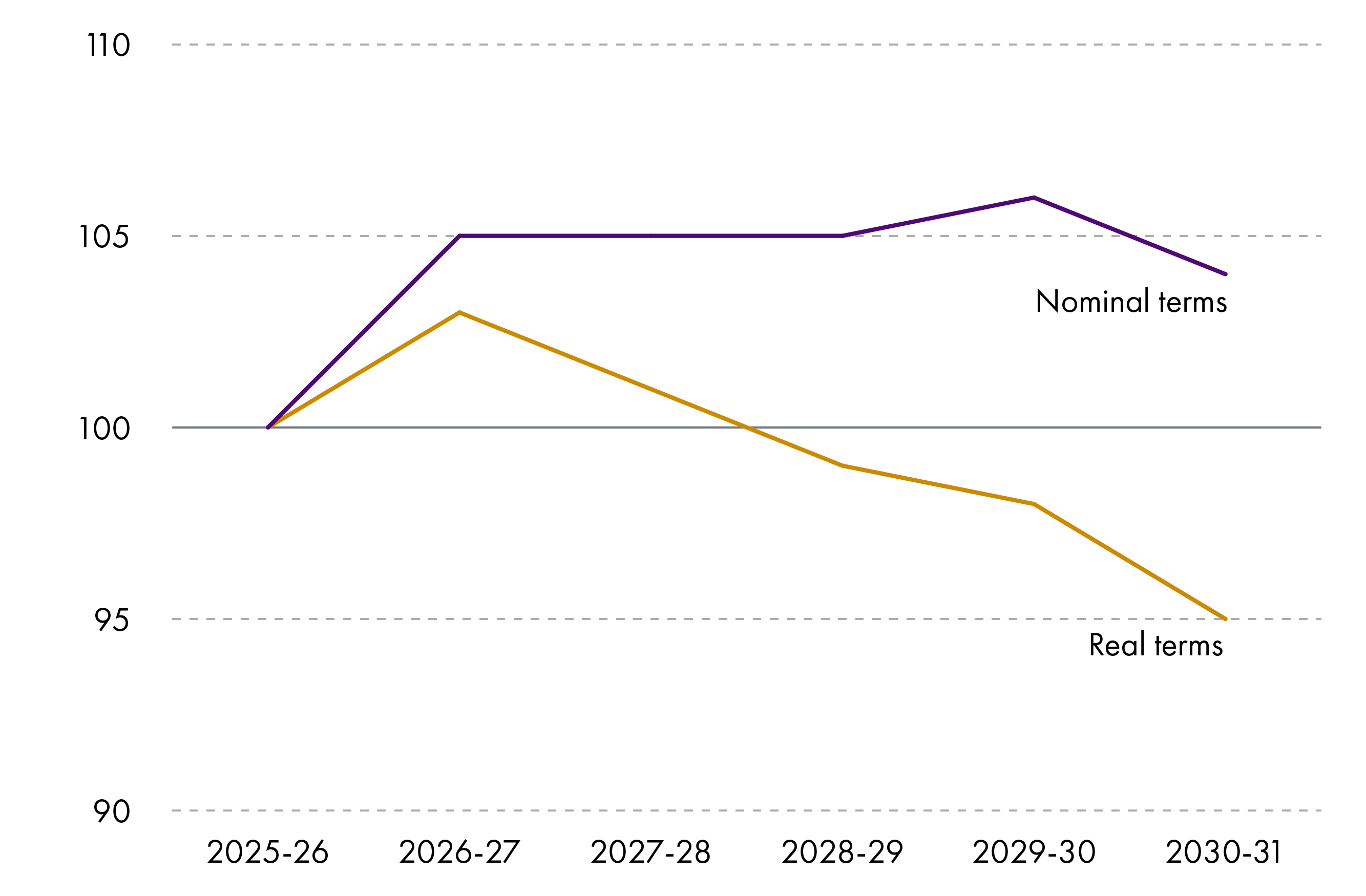
Image: Figure 9: Capital funding outlook
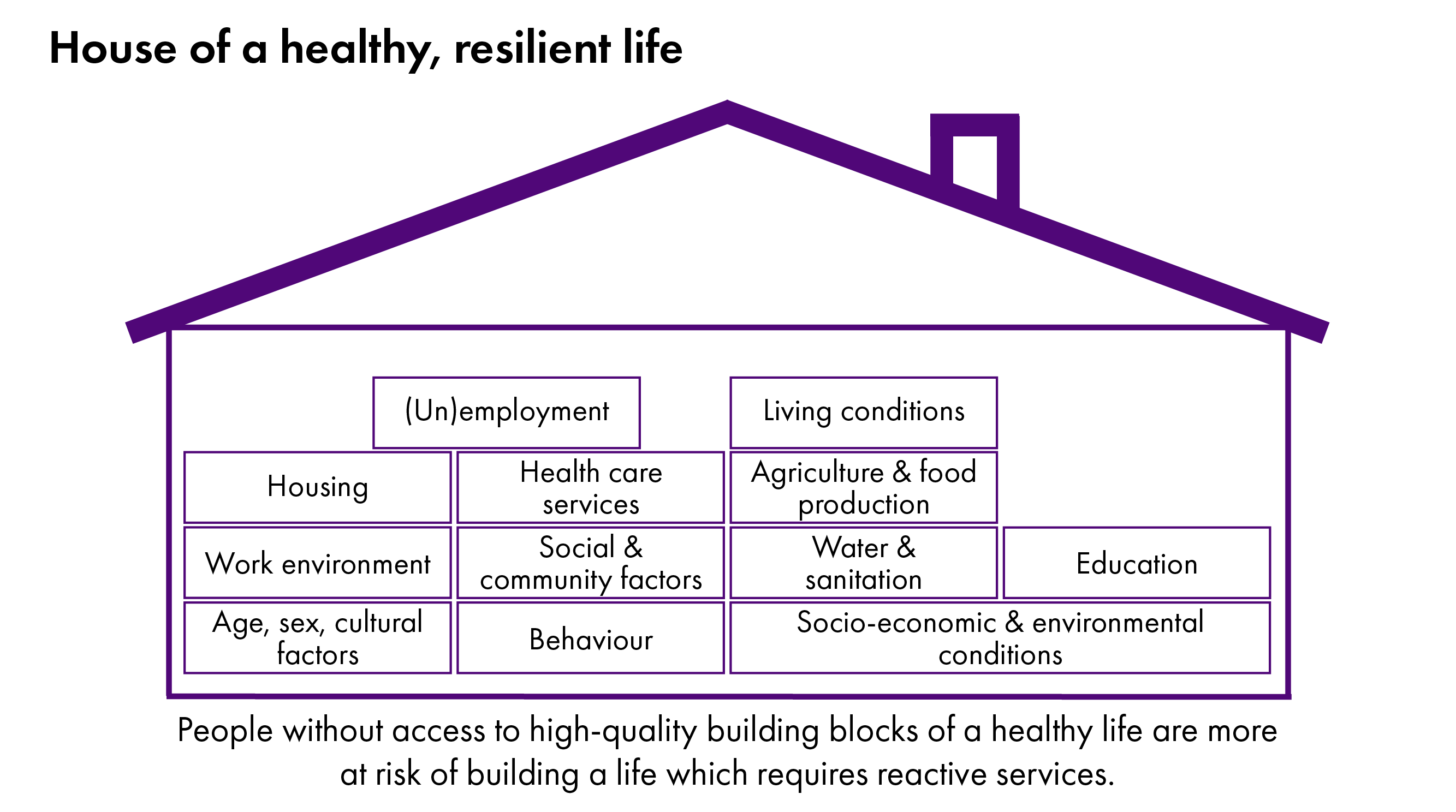
Image: Figure 10: Building Blocks of Health and wellbeing
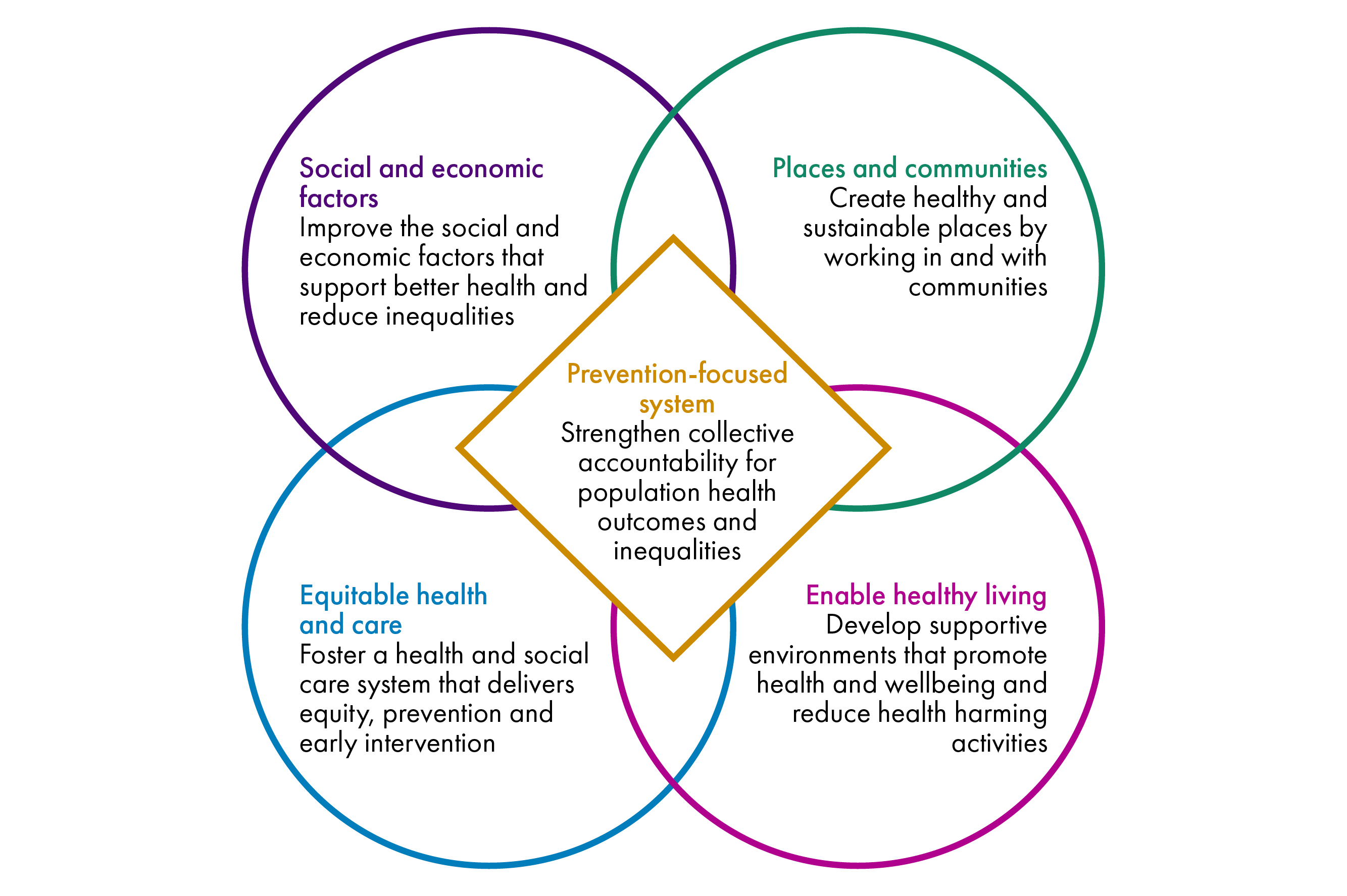
Image: Figure 11: Population Health Framework includes prevention at the core of its structure
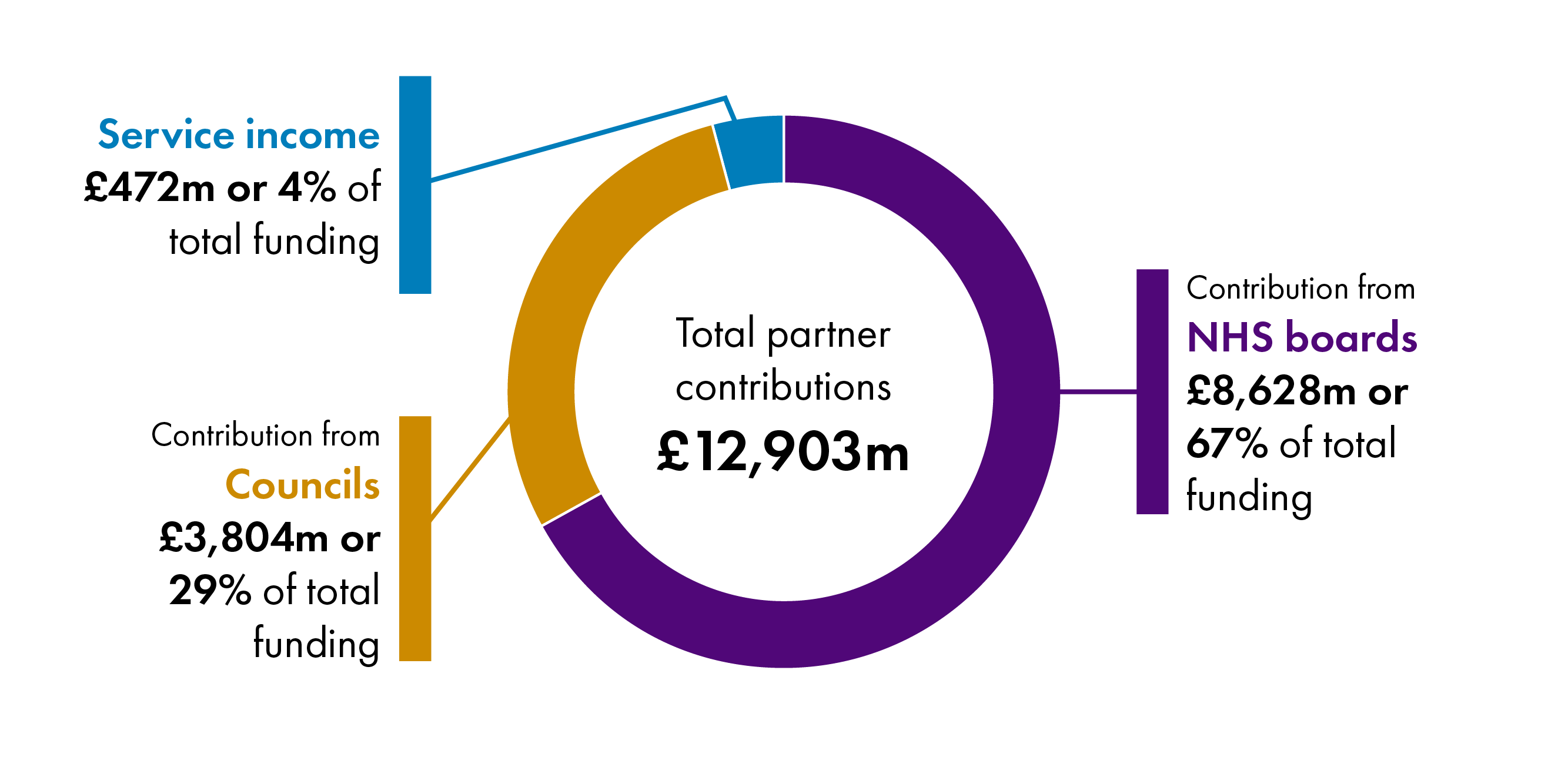
Image: Figure 13: Breakdown of funding for Integration Joint Boards (2024-25)
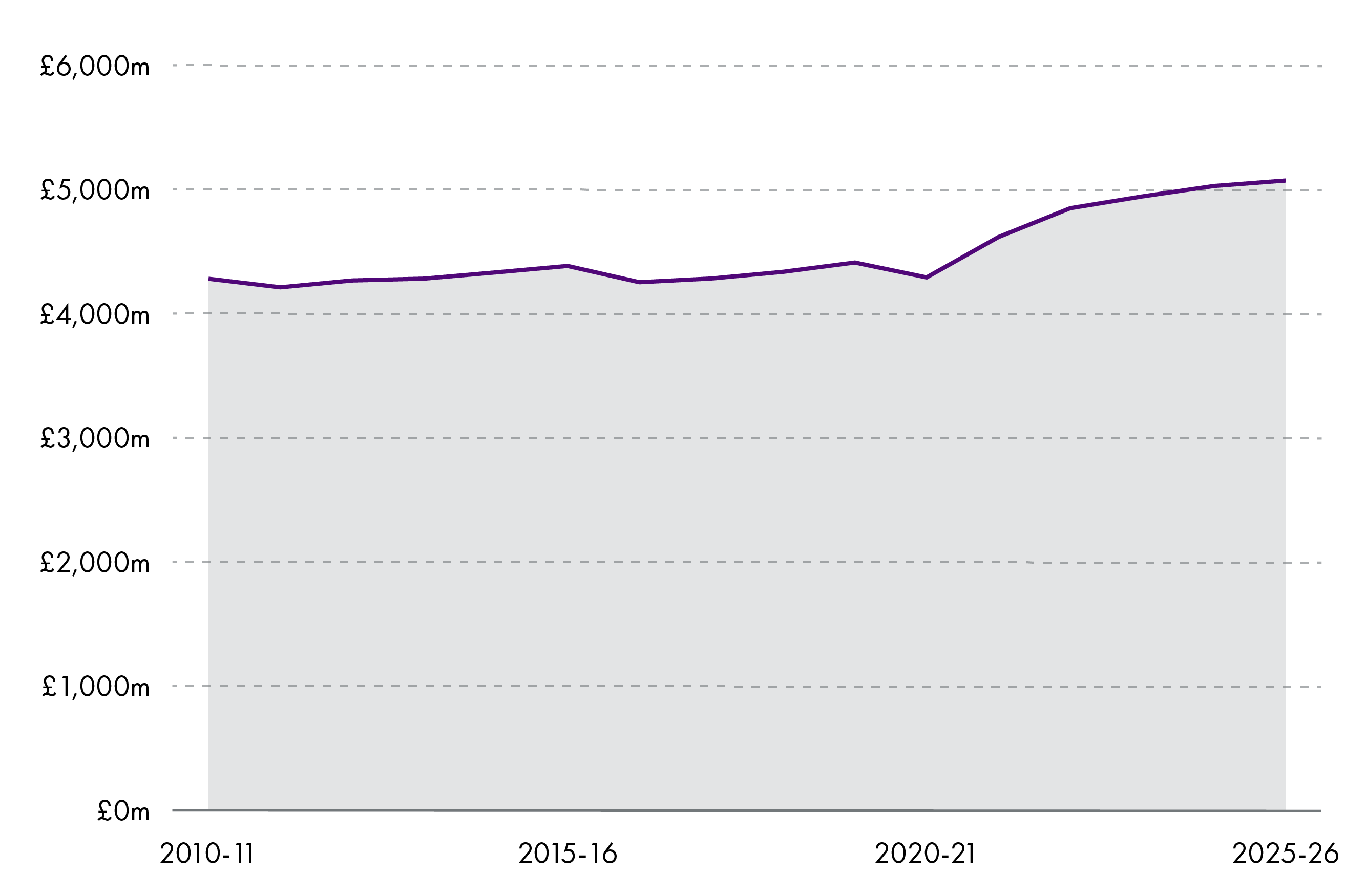
Image: Figure 14: Local government spend on social work (2025-26 prices)
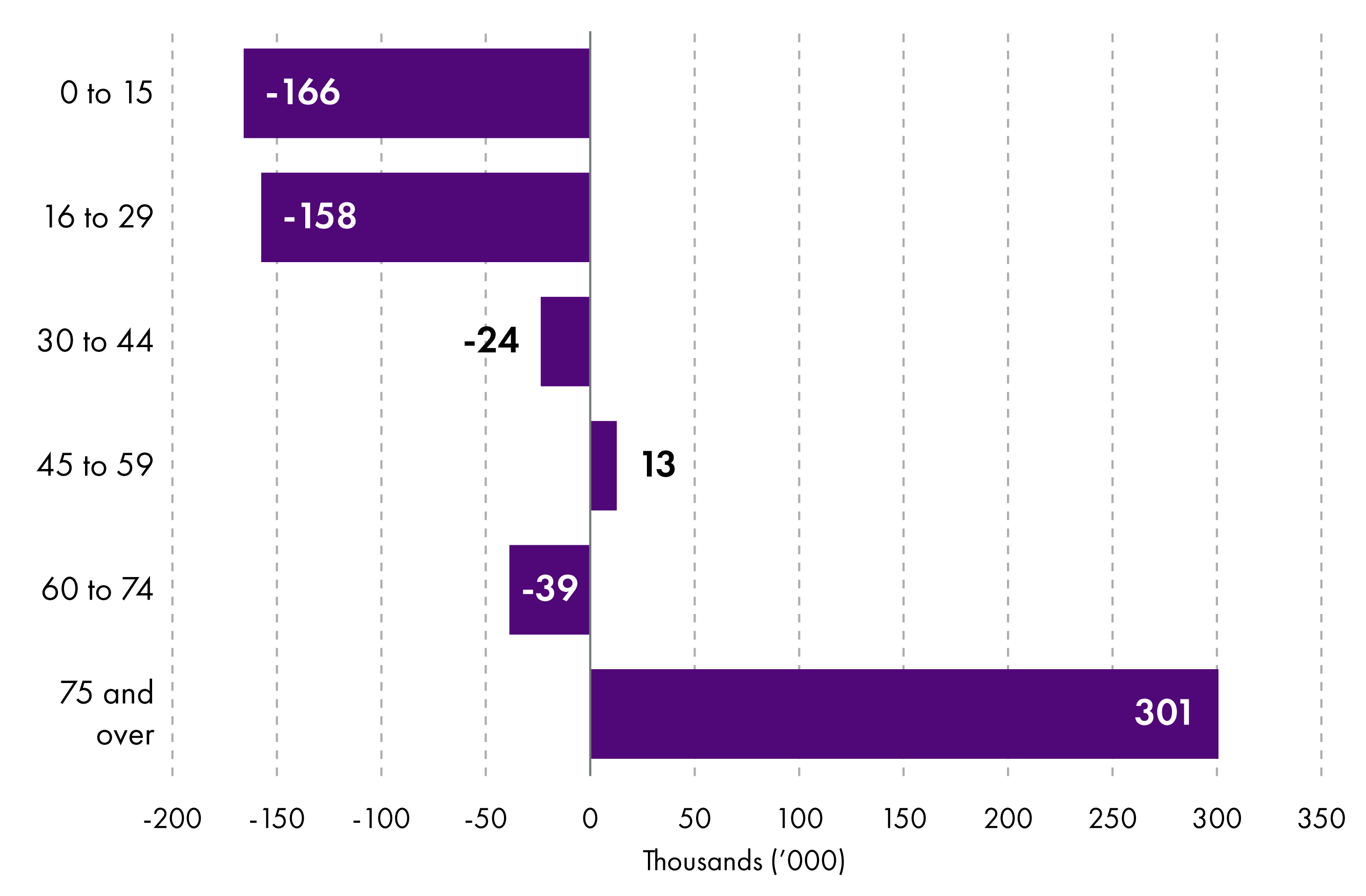
Image: Figure 15: Projected population change by age group, mid-2024 to mid-2049 (thousands)
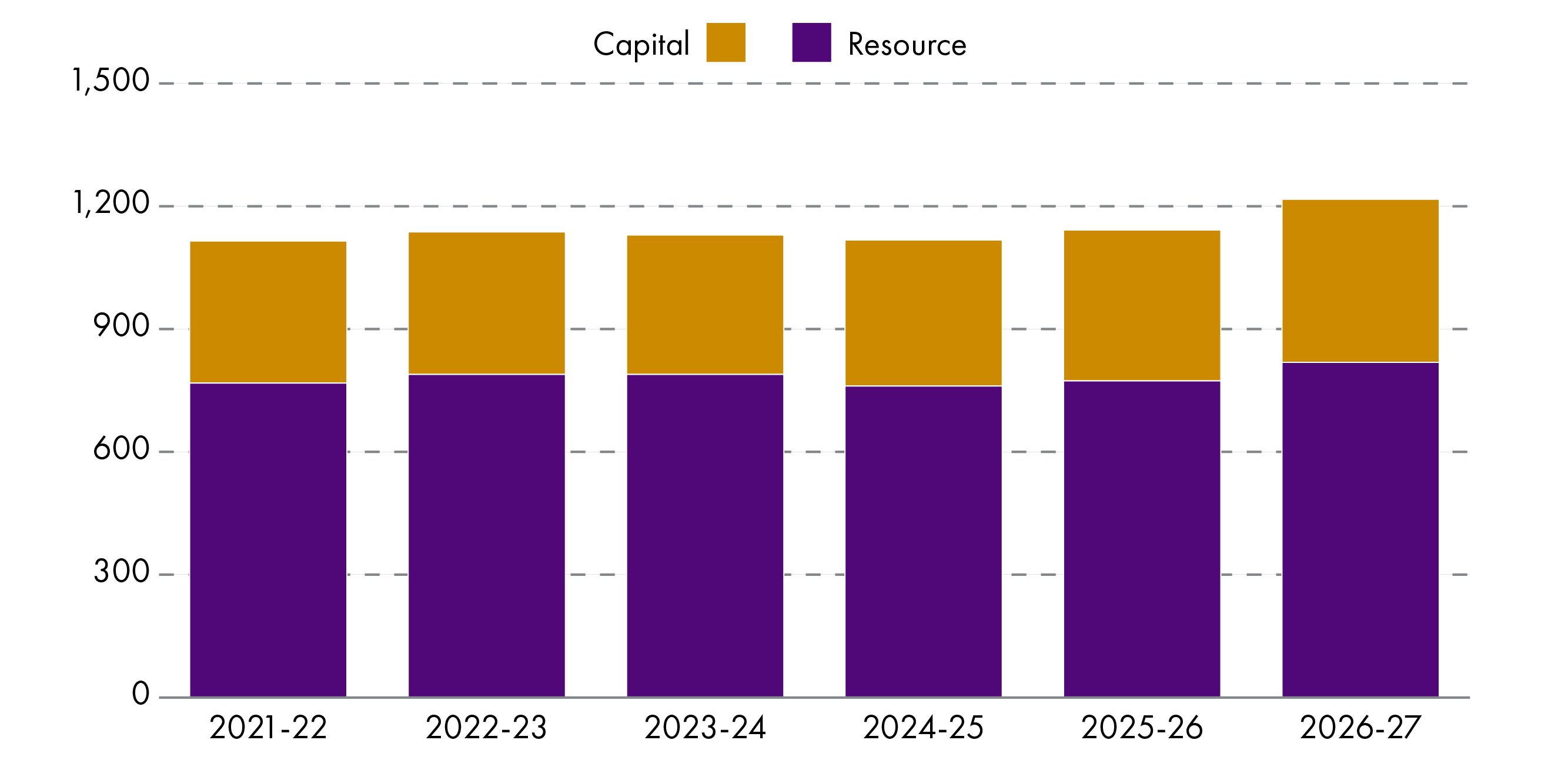
Image: Figure 16: College budgets 2021-22 to 2026-27
Image: Figure 17: University budgets 2021-22 to 2026-27
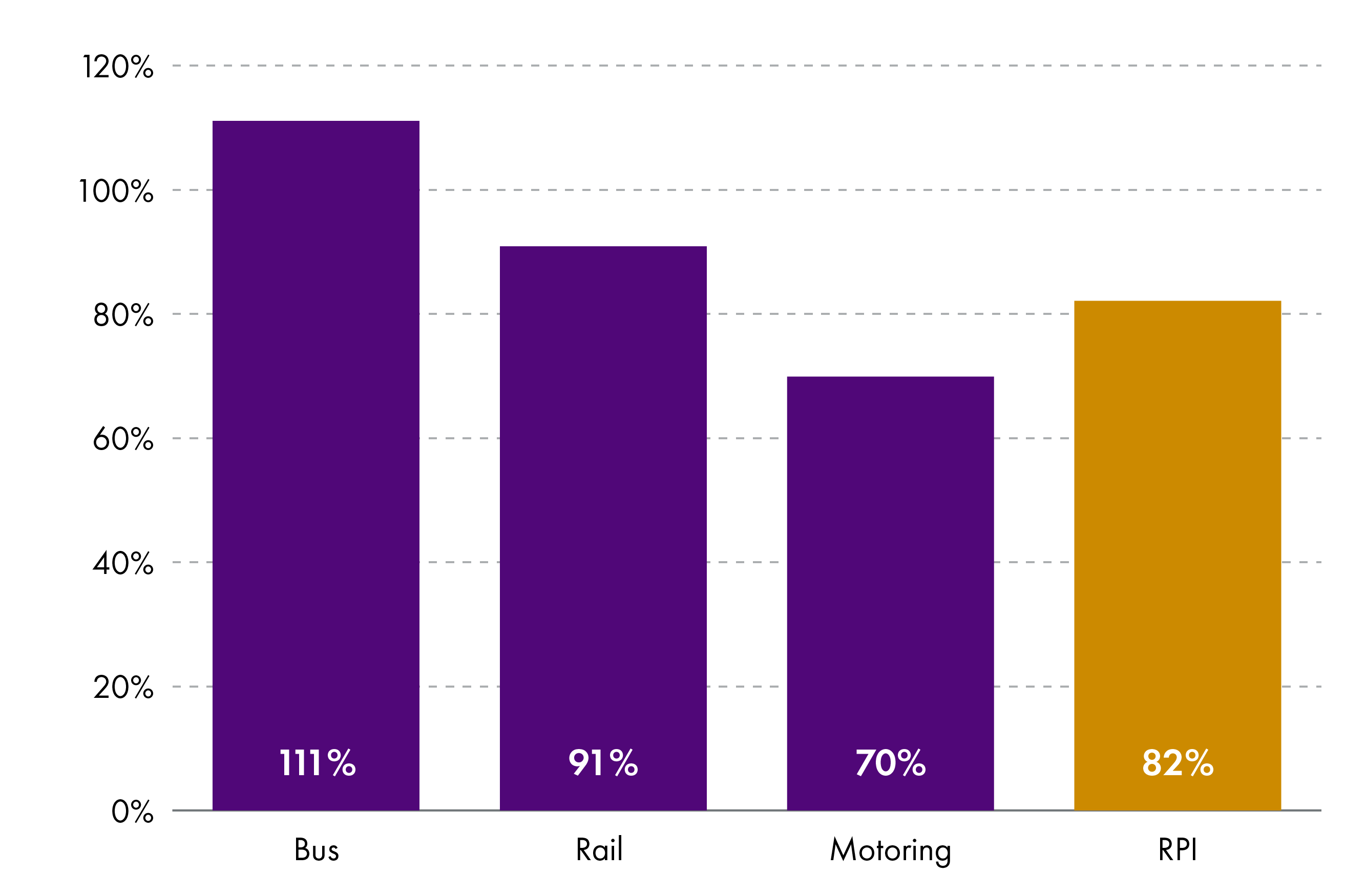
Image: Figure 18: Percentage increase in transport costs by mode between 2004 and 2025
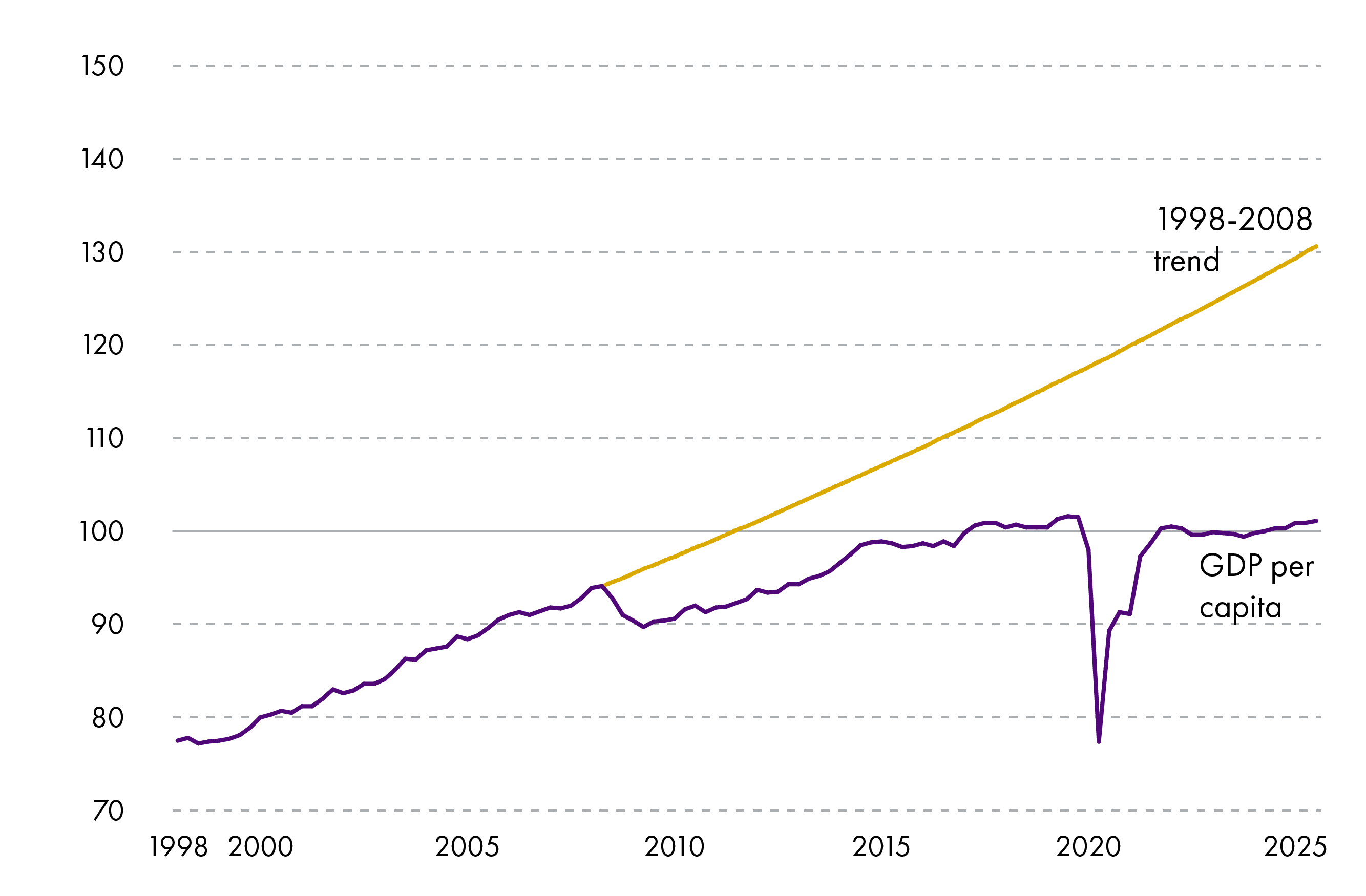
Image: Figure 19: Onshore GDP per capita, chained volume measure (2022=100), Scotland
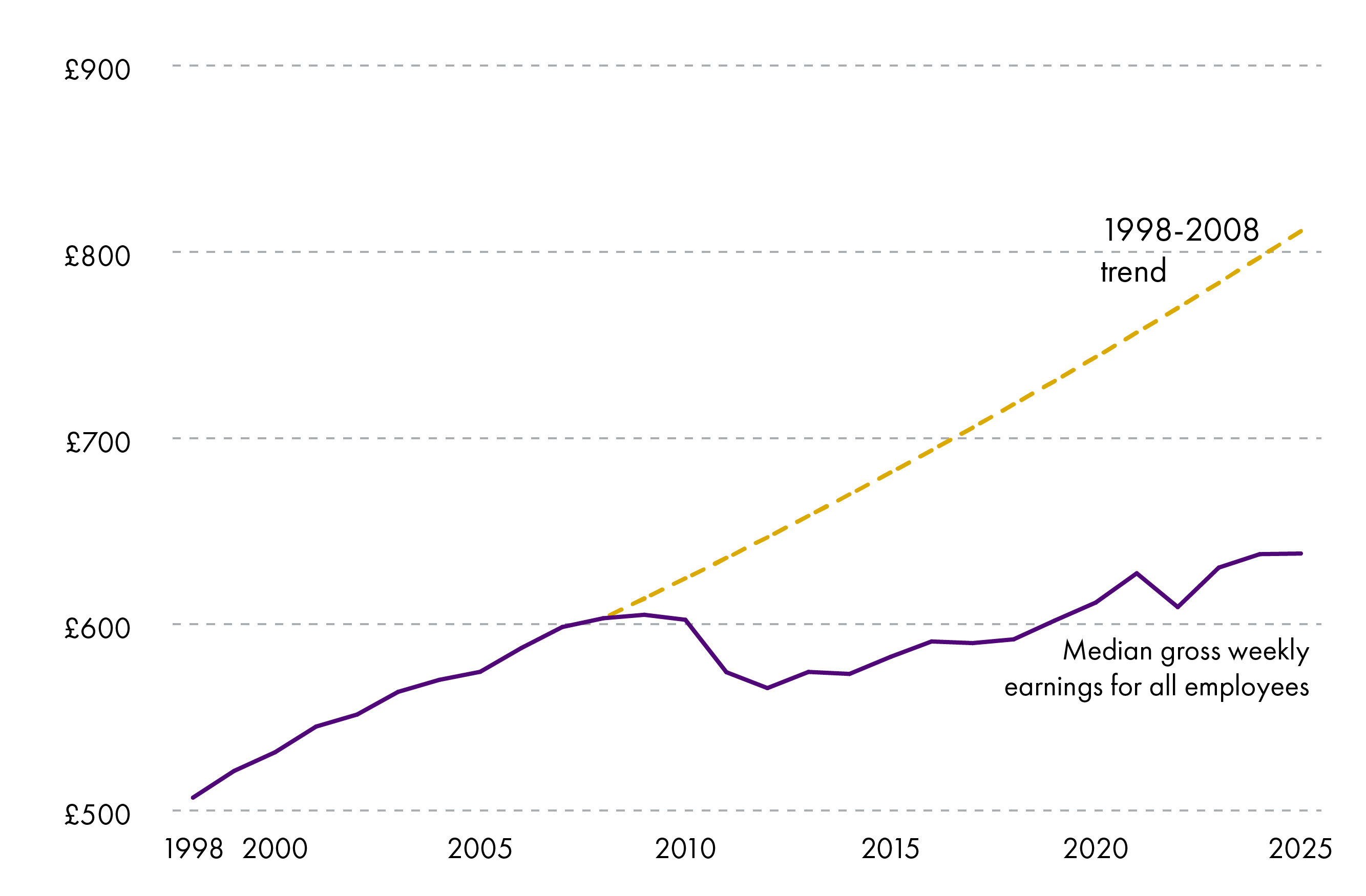
Image: Figure 20: Median gross weekly earnings for employees (£, 2025 prices), Scotland
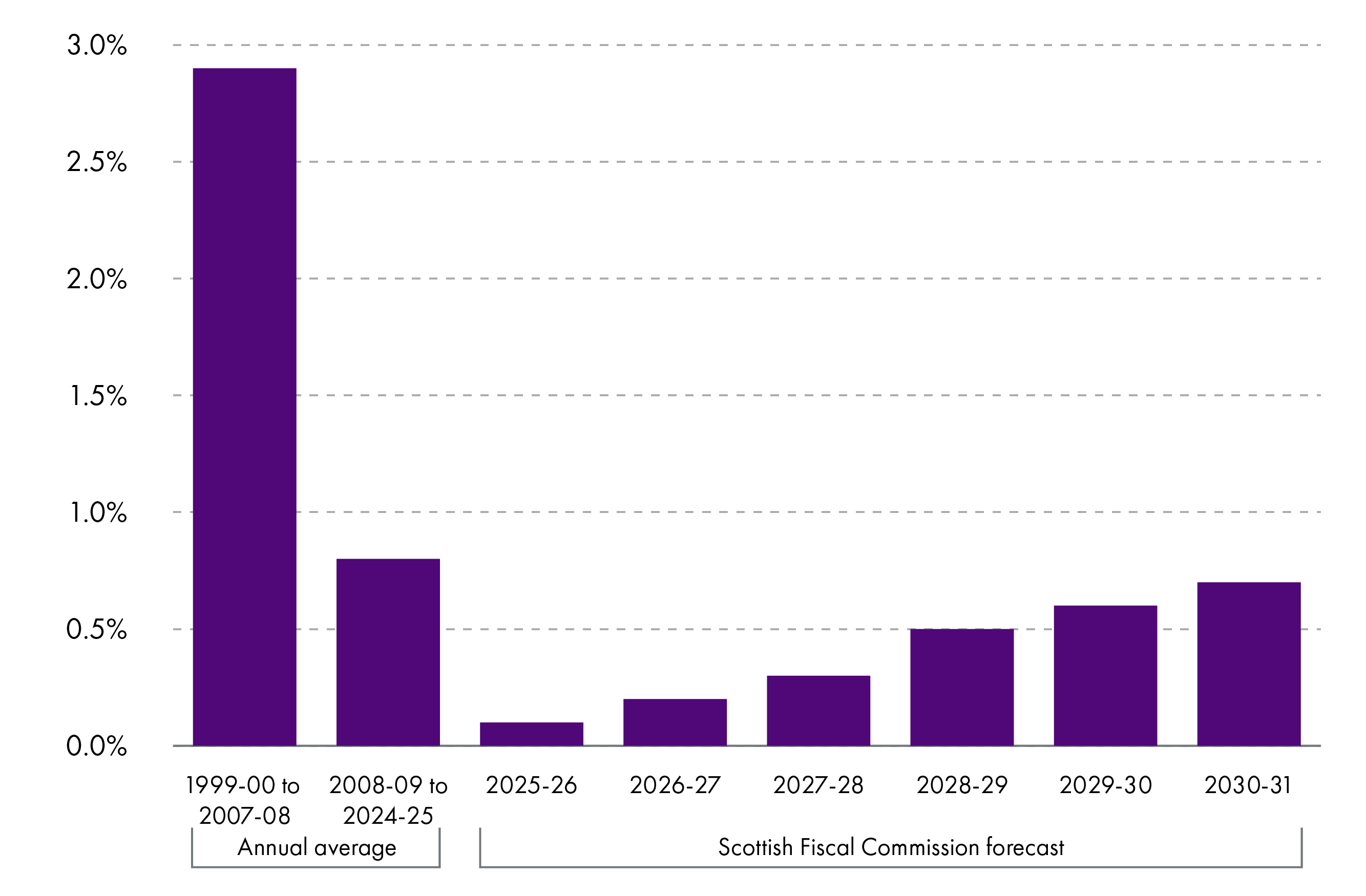
Image: Figure 21: Average annual growth rate in real disposable income per person, Scotland
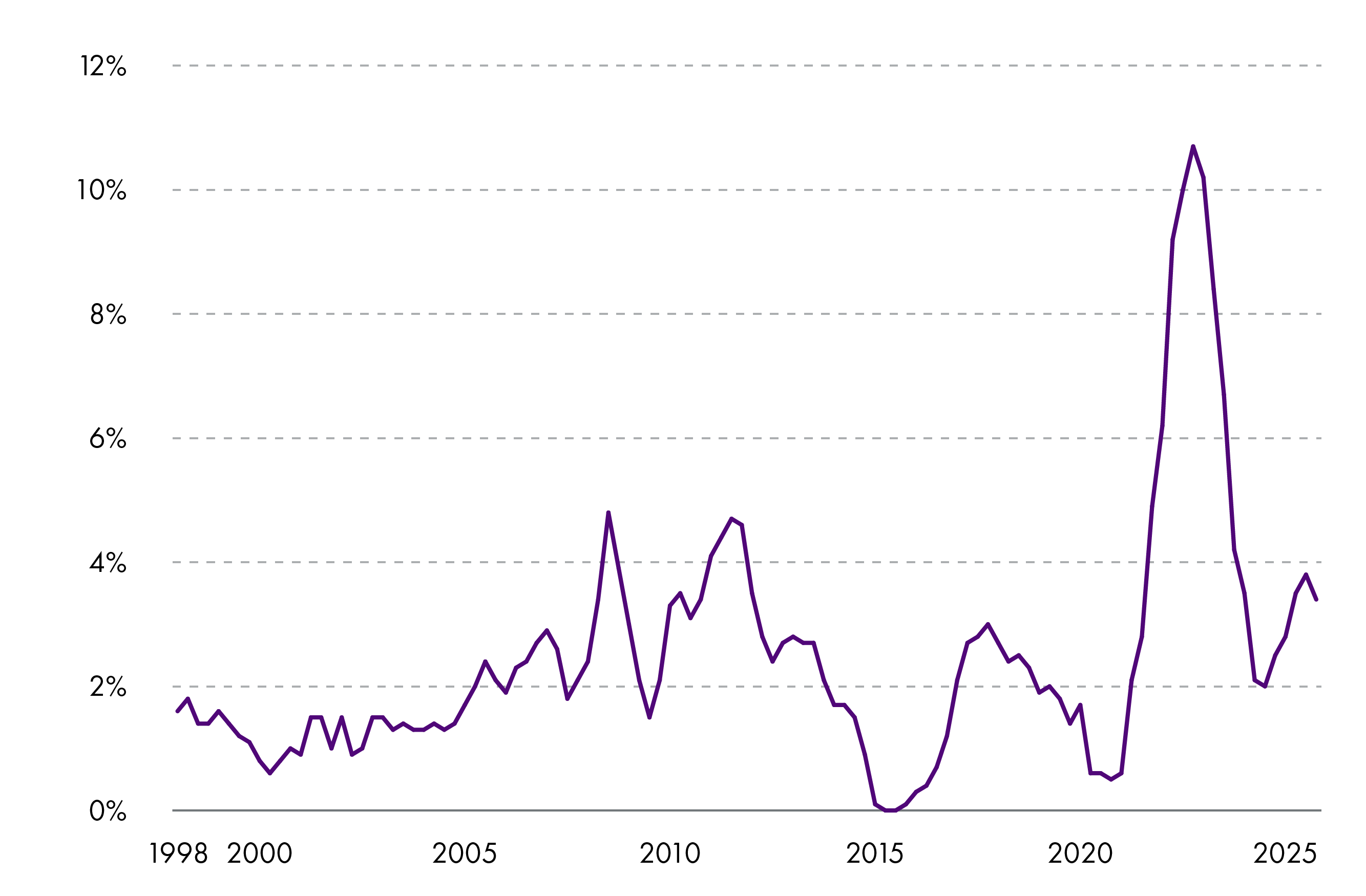
Image: Figure 22: Annual rate of Consumer Price Index inflation, UK
Image: Figure 24: These external shocks have had a significant impact on Scotland's economy and politics
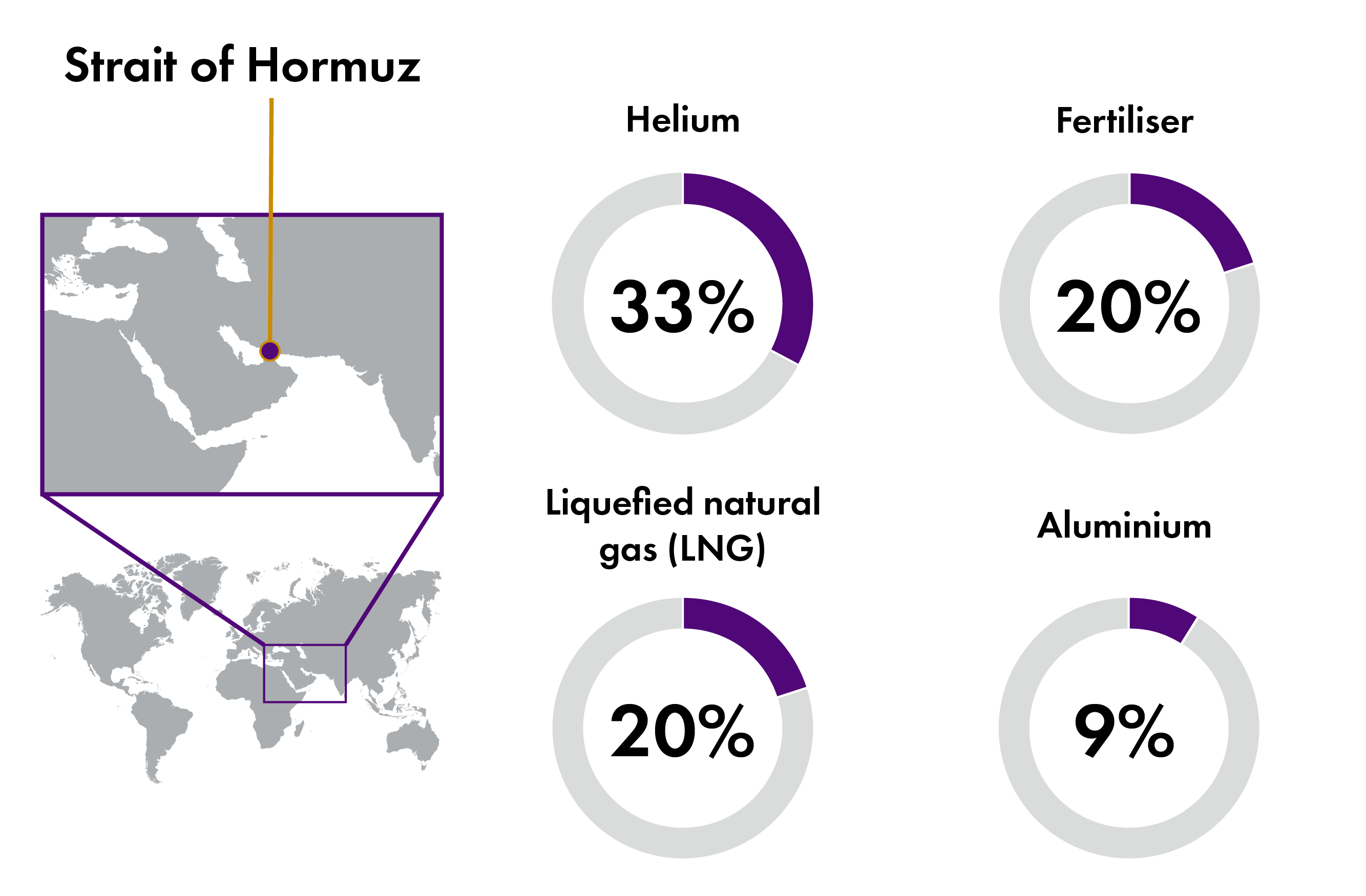
Image: Figure 25: The Strait of Hormuz is an important trade route for several industrial goods
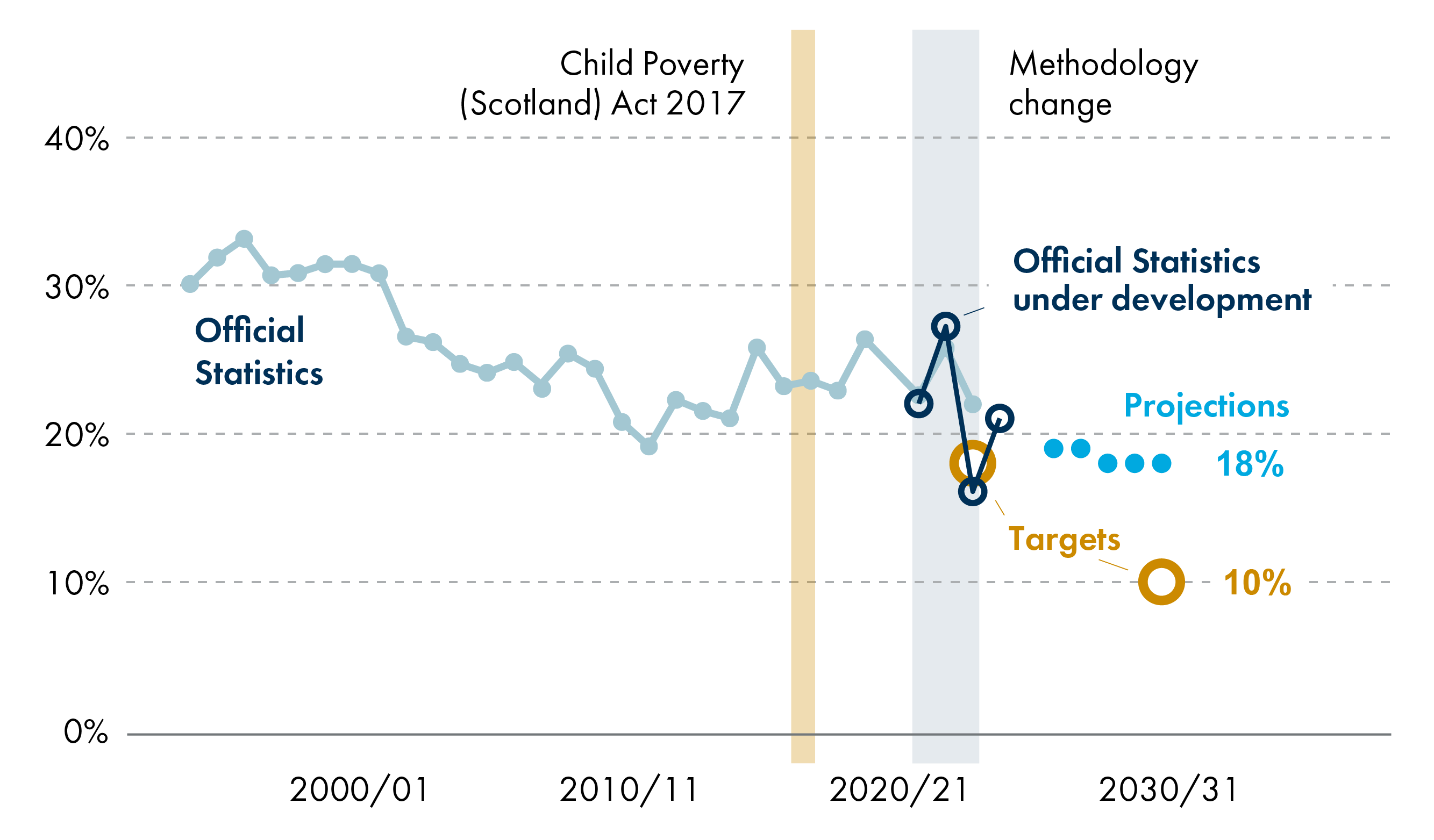
Image: Figure 26: Children in relative poverty after housing costs: Official statistics, projections and statutory targets.
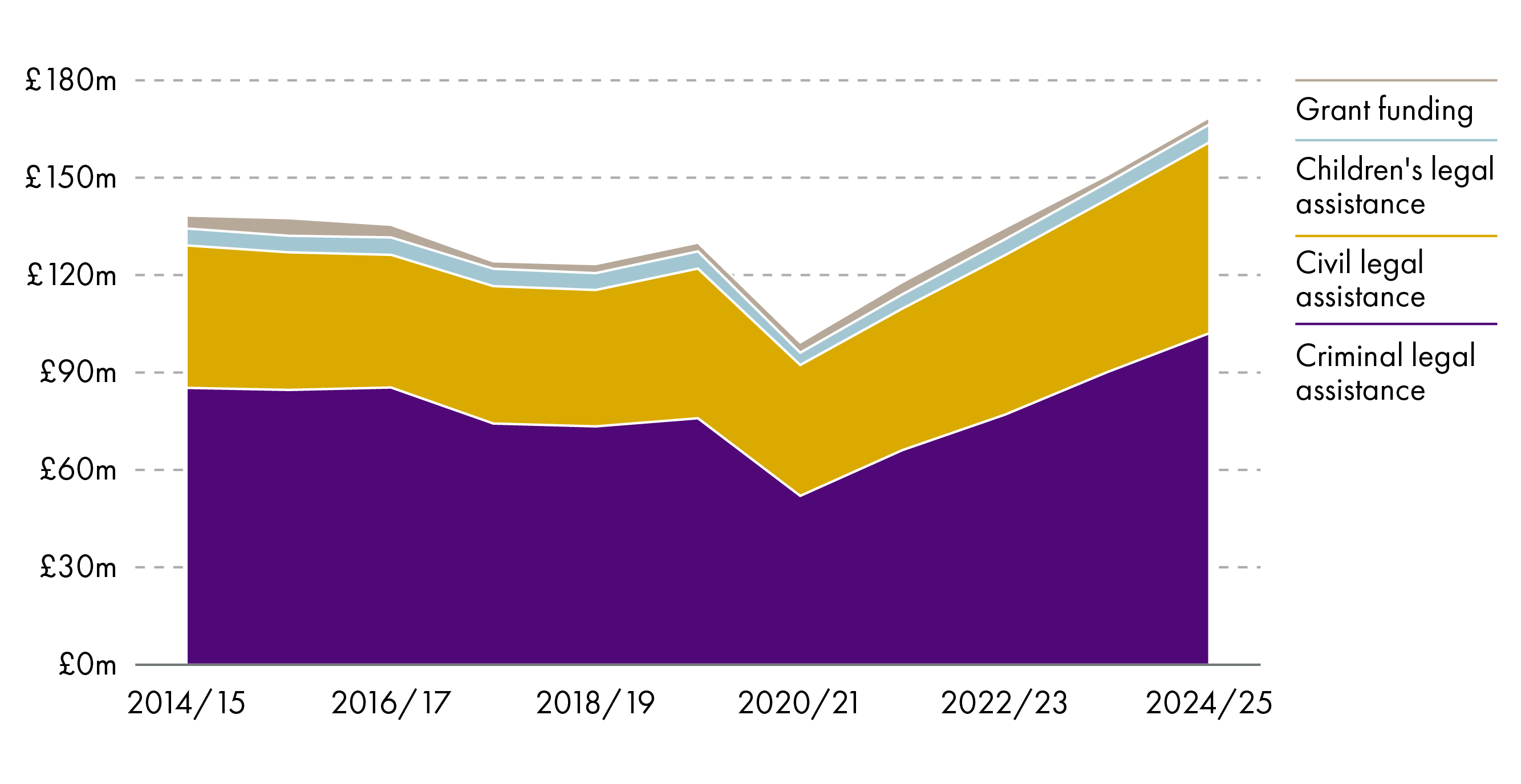
Image: Figure 27: net legal aid expenditure 2014-15 to 2024-25
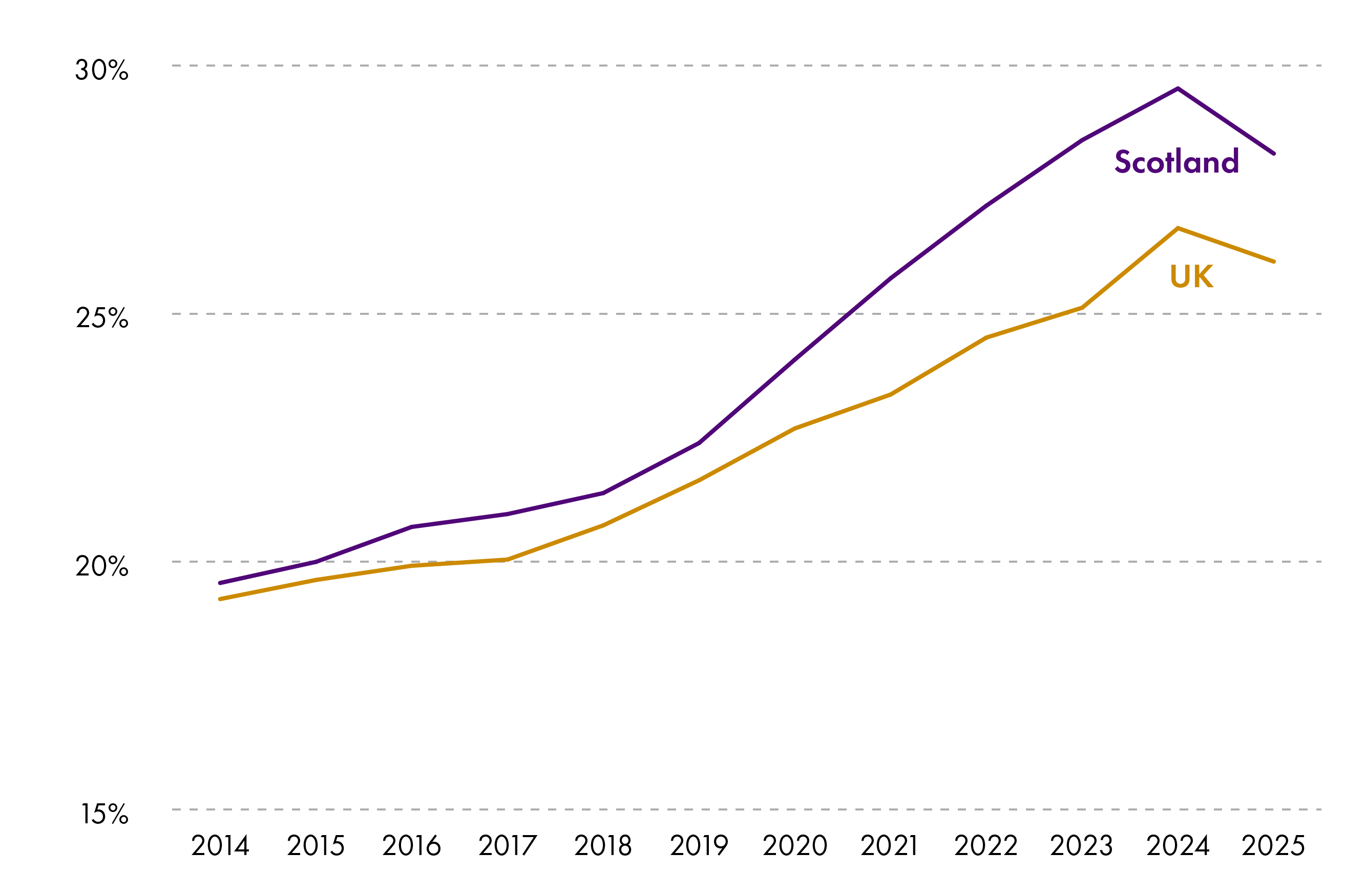
Image: Figure 28: Disability prevalence age 16-64, Scotland and UK
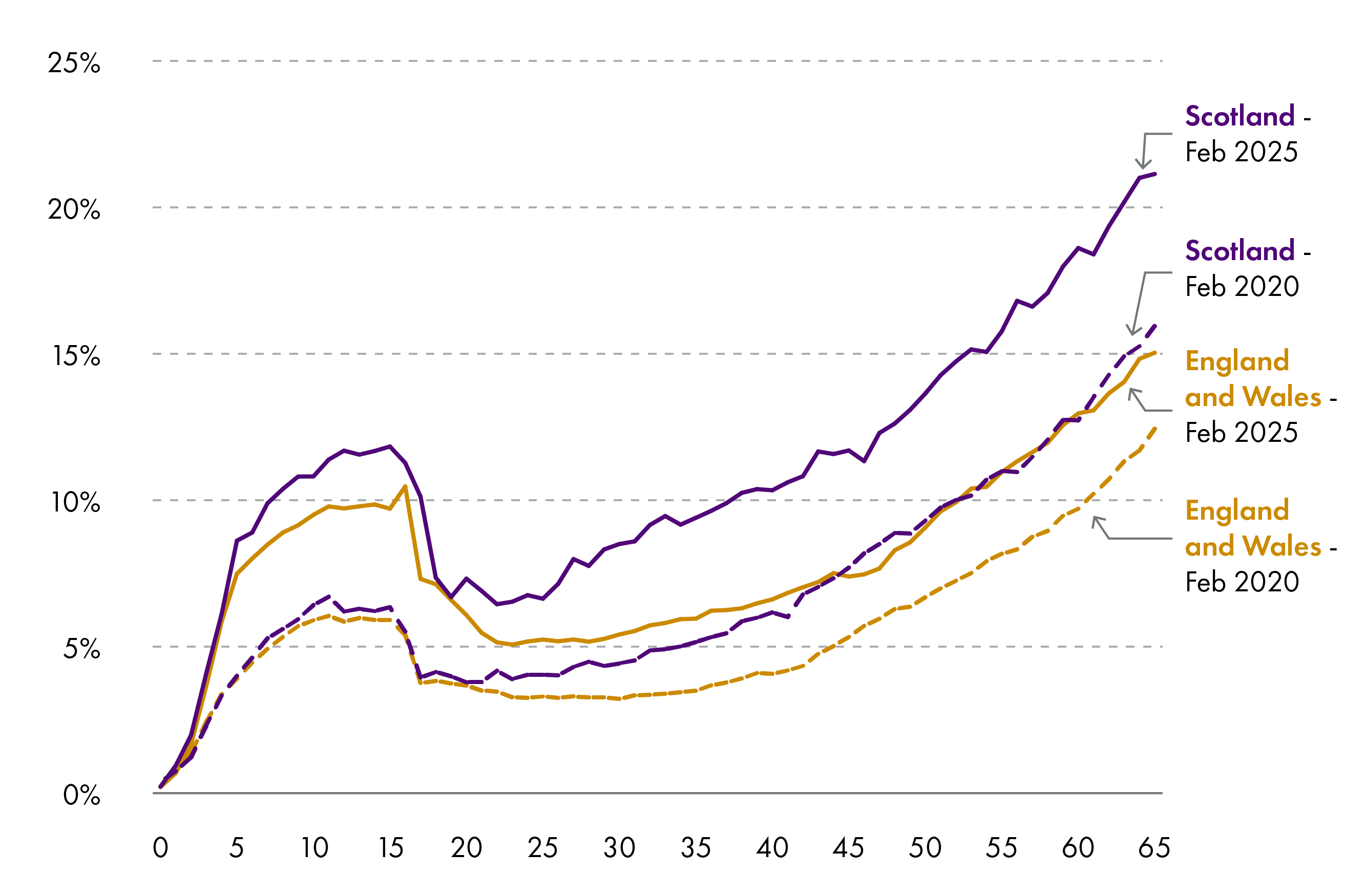
Image: Figure 29: Percentage of population receiving disability payments in Scotland and England and Wales, by year of age in 2020 and 2025
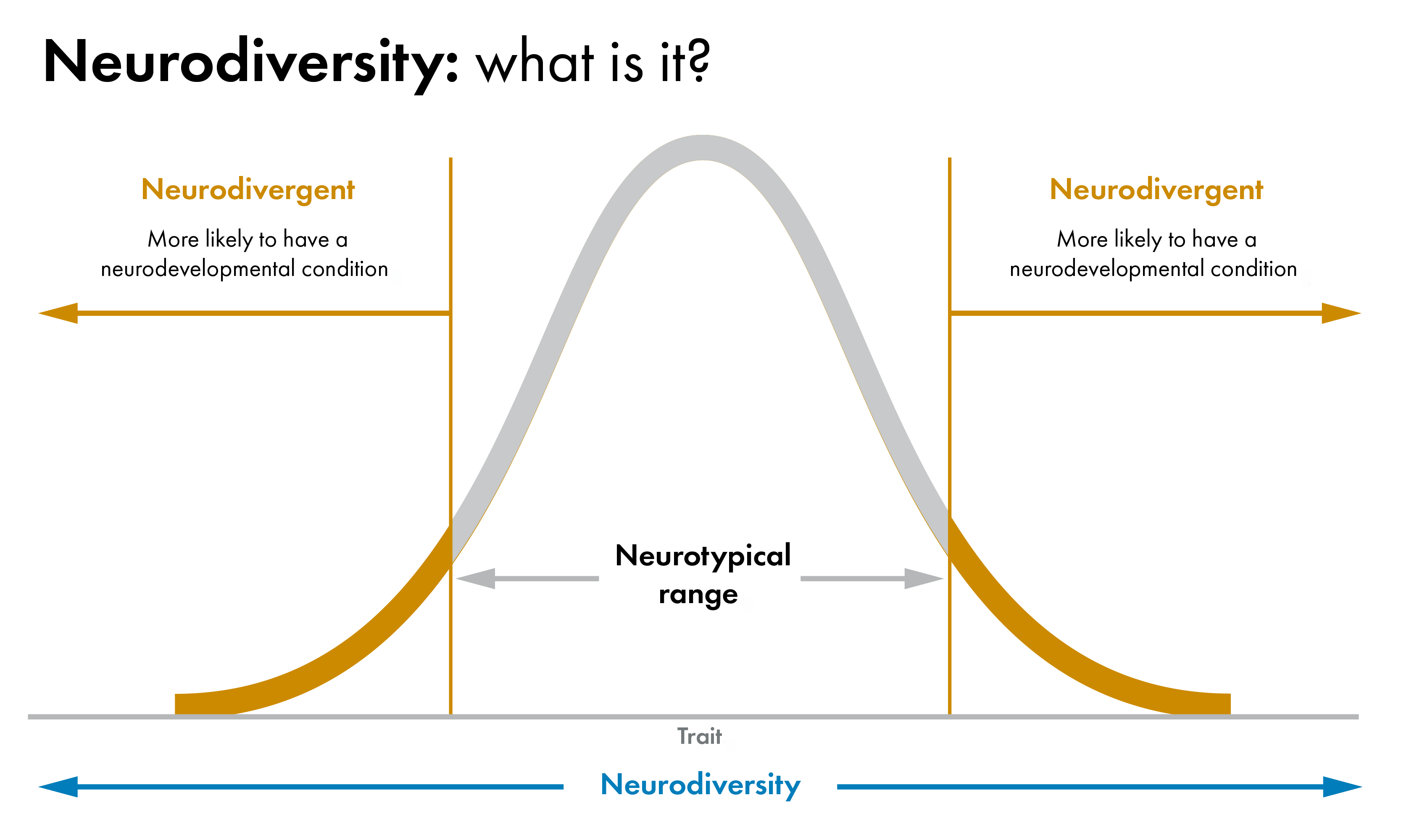
Image: Figure 30: Neurodiversity: what is it?
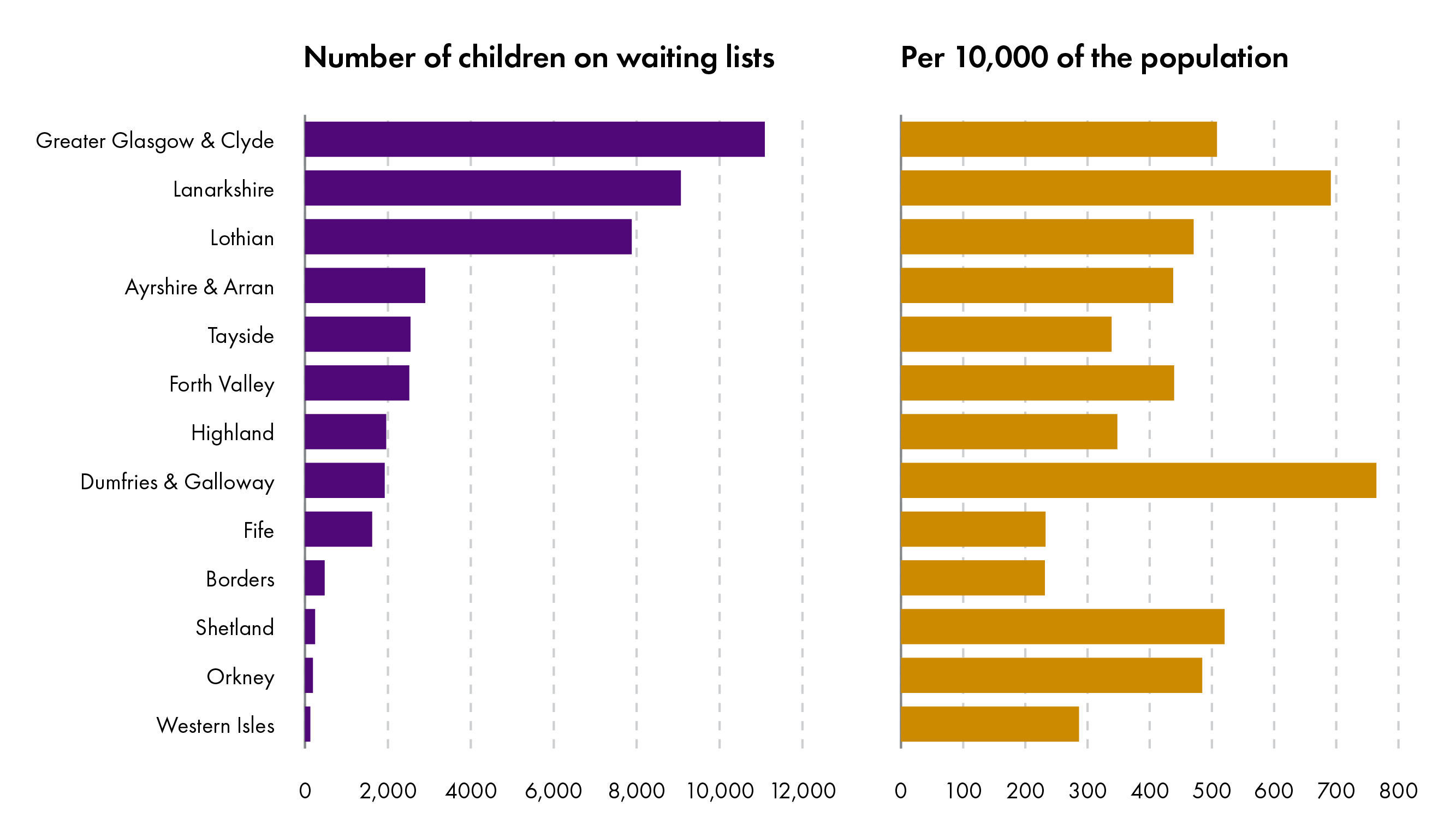
Image: Figure 31: Number of children waiting for a neurodevelopmental assessment in each health board (March 2025)
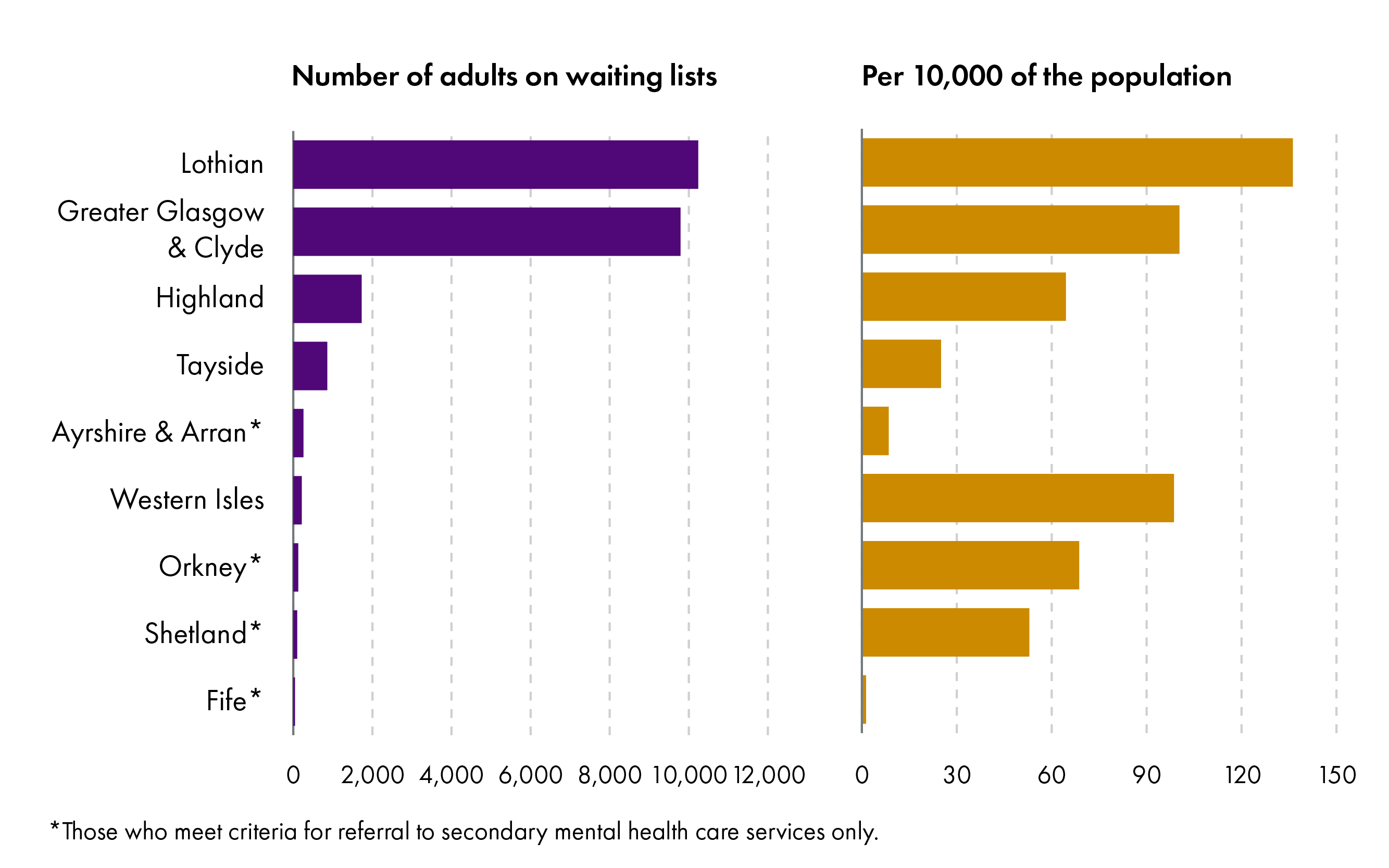
Image: Figure 32: Number of adults waiting for a neurodevelopment assessment in each health board (March 2025)
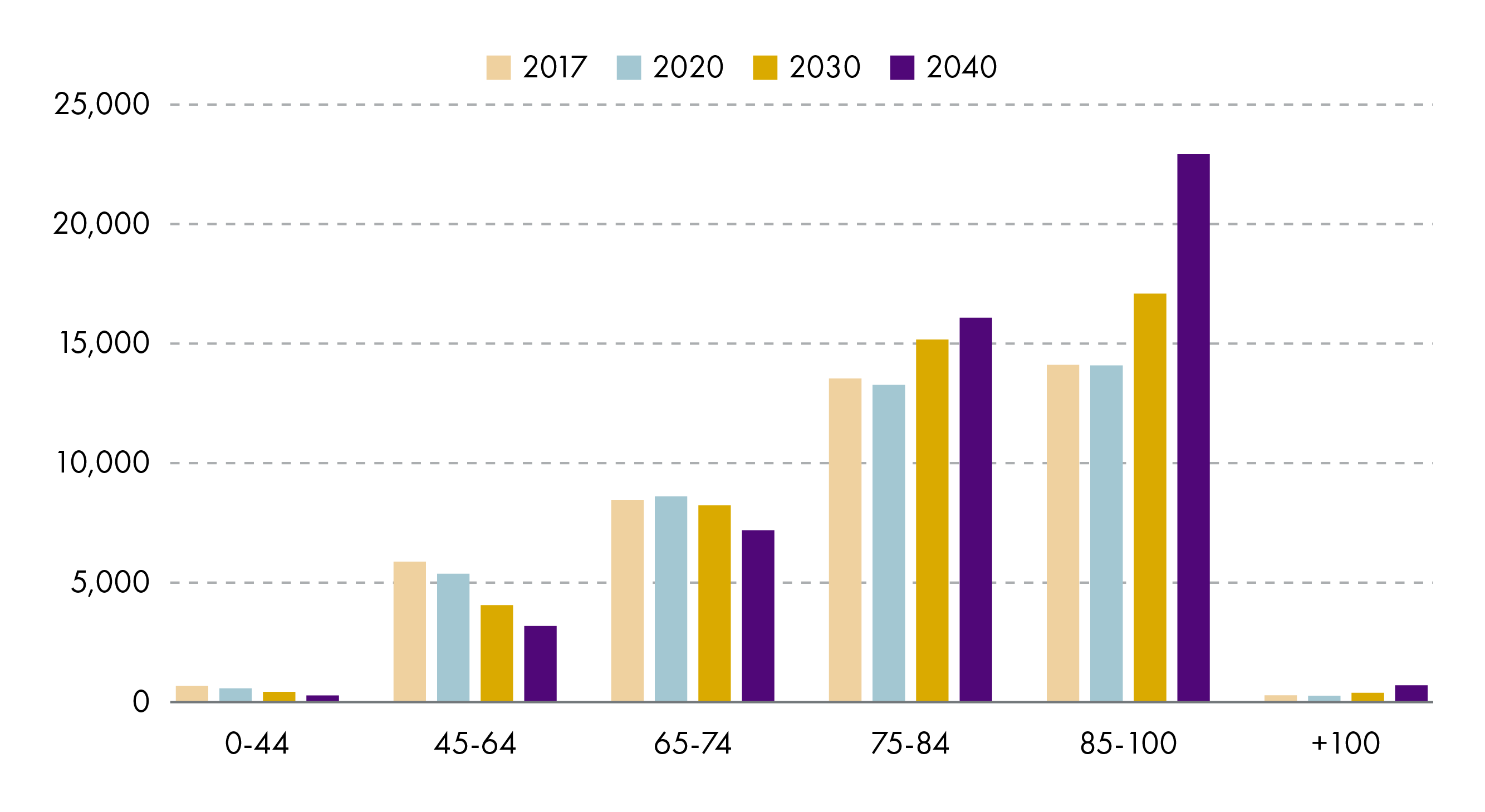
Image: Figure 33: Projected number of people dying with palliative care needs in Scotland by 2040, by age group
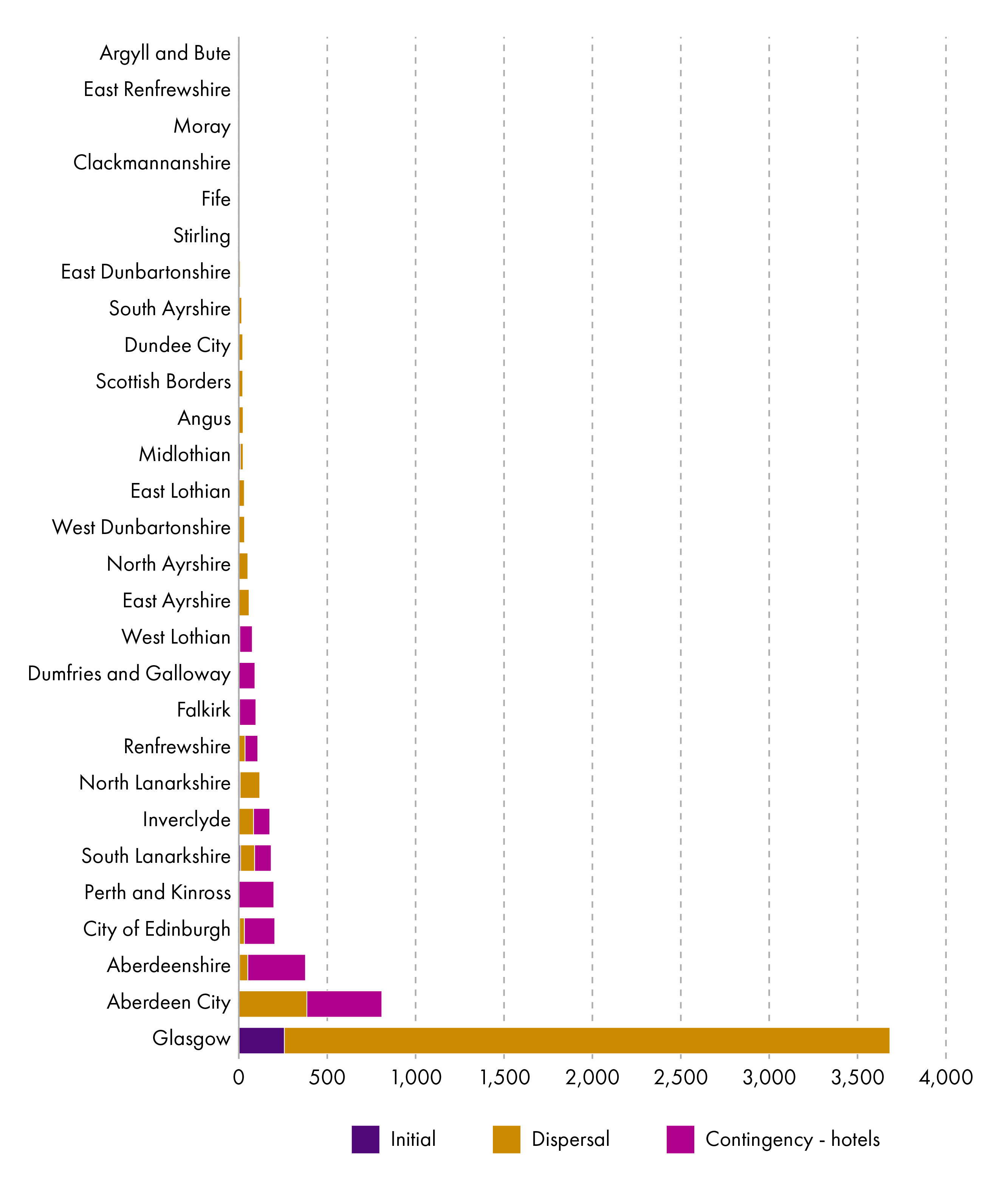
Image: Figure 34: Where asylum seekers live in Scotland, by accommodation type, as at December 2025
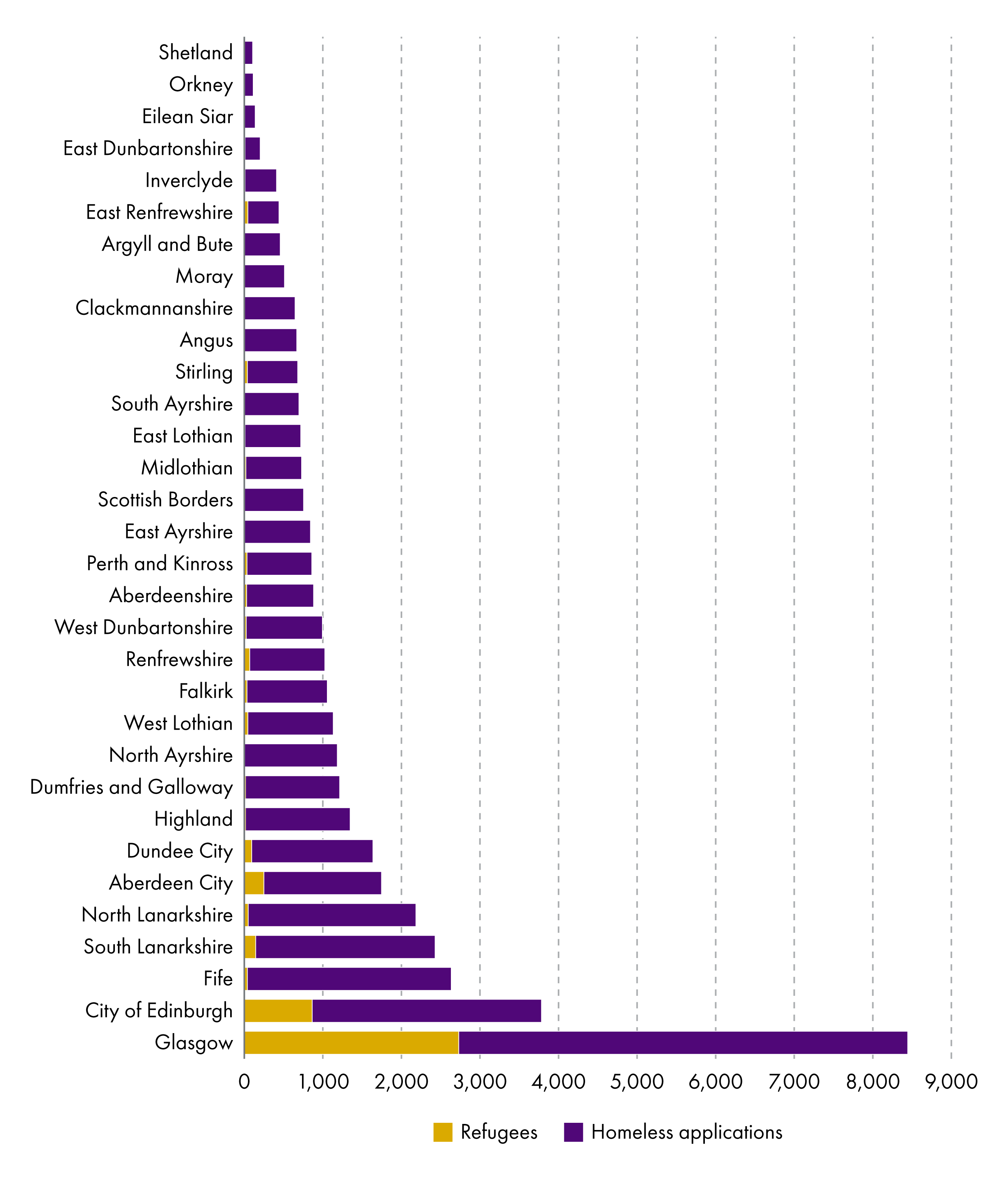
Image: Figure 35: Homeless applications by local authority in 2024-25 and the proportion of applicants with refugee status
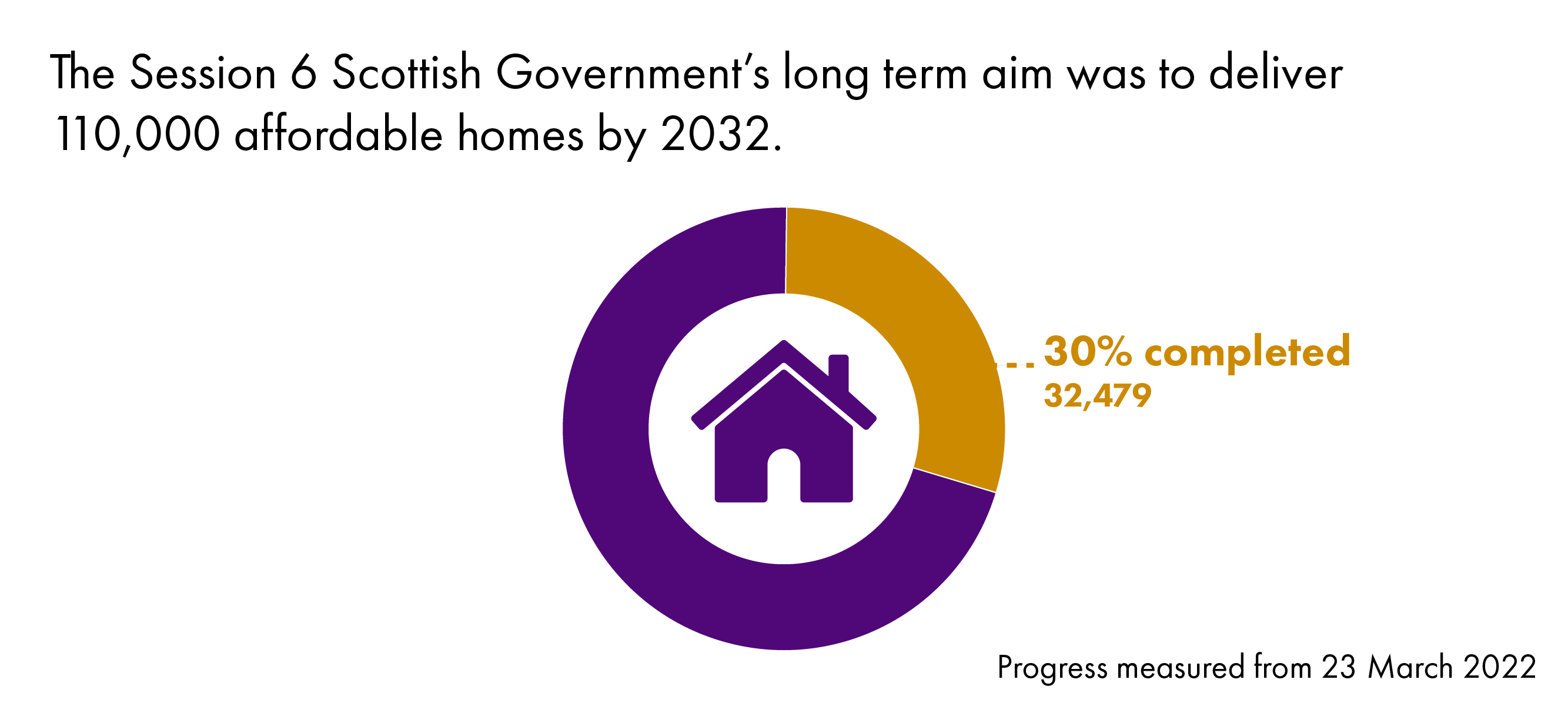
Image: Figure 36: The Session 6 Scottish Government's affordable housing supply target - progress to 31 December 2025
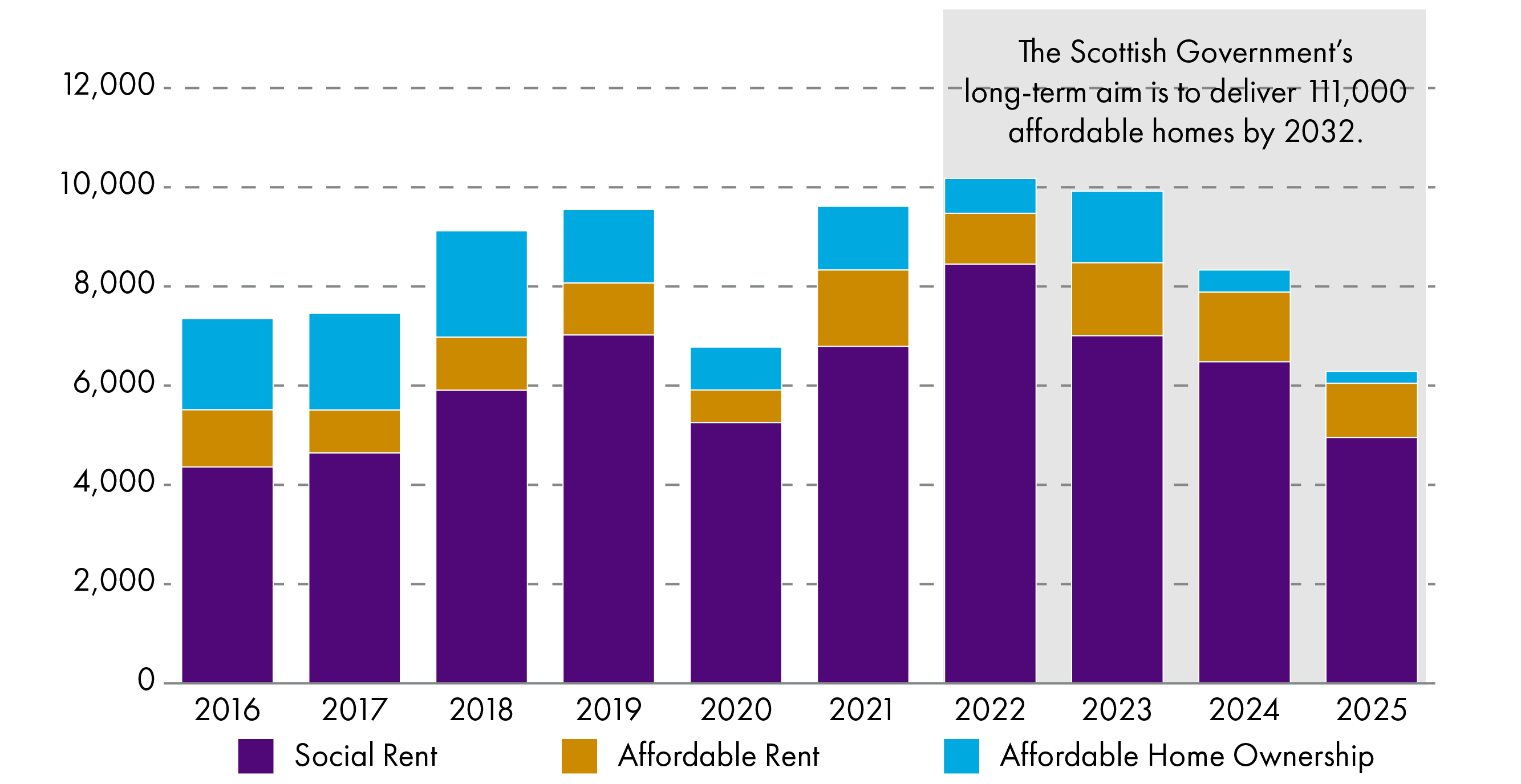
Image: Figure 37: Affordable Housing Supply Completions by type - 2016 to 2025
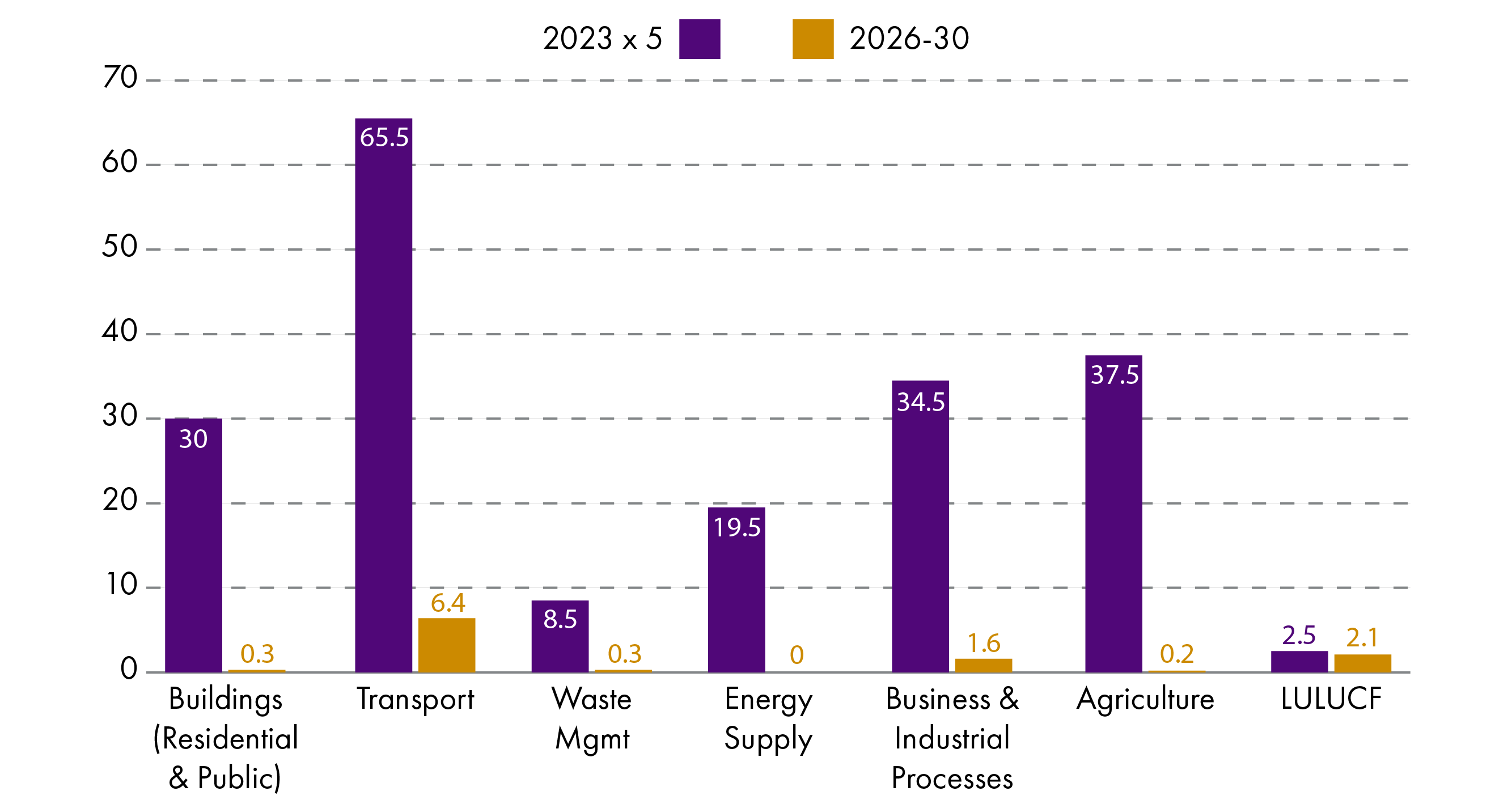
Image: Figure 38: Current emissions (as a 5-year carbon budget) and reduction in emissions planned over 2026-30 (first carbon budget)
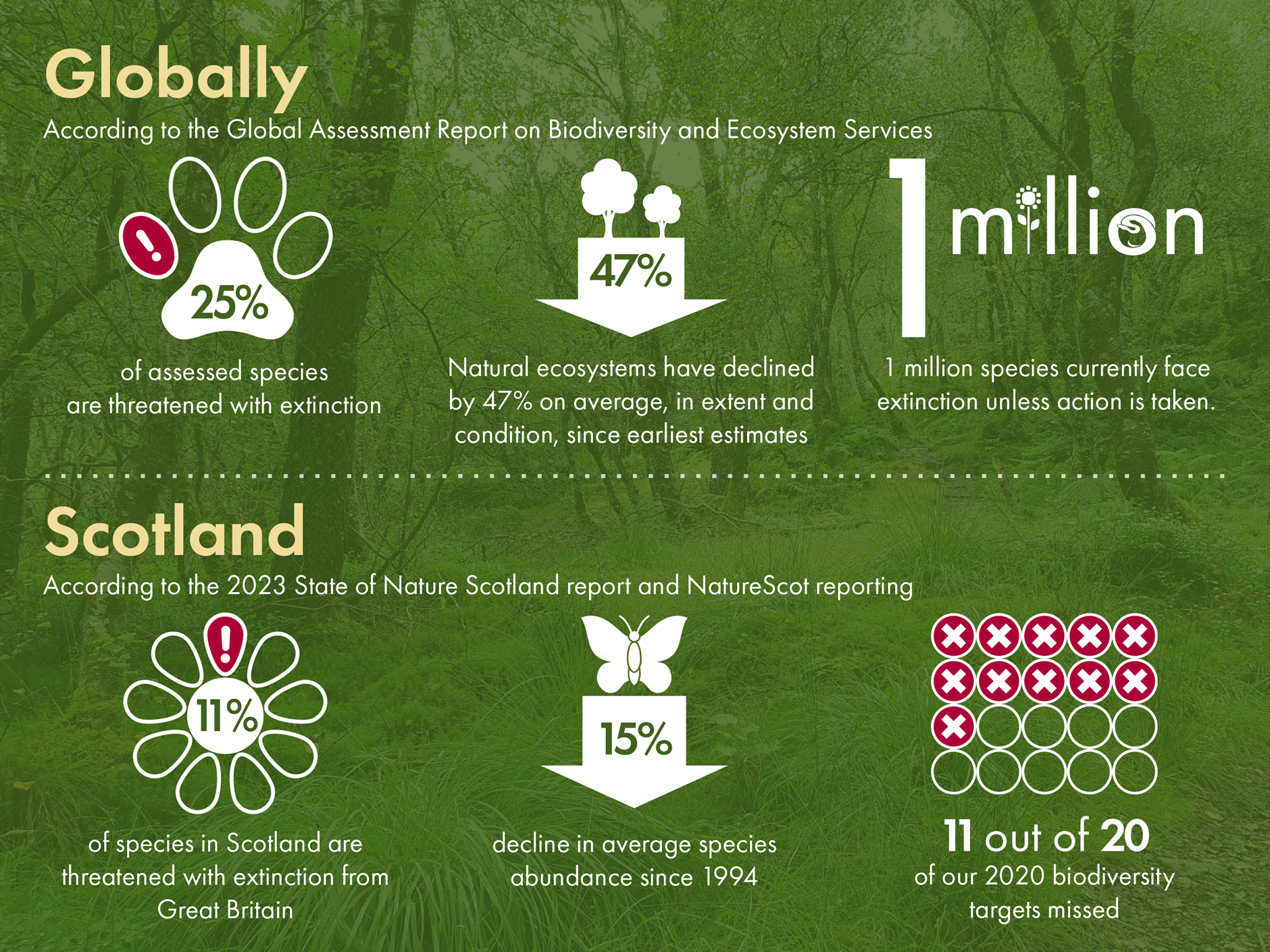
Image: Figure 40: The nature crisis in Scotland and globally - some key figures
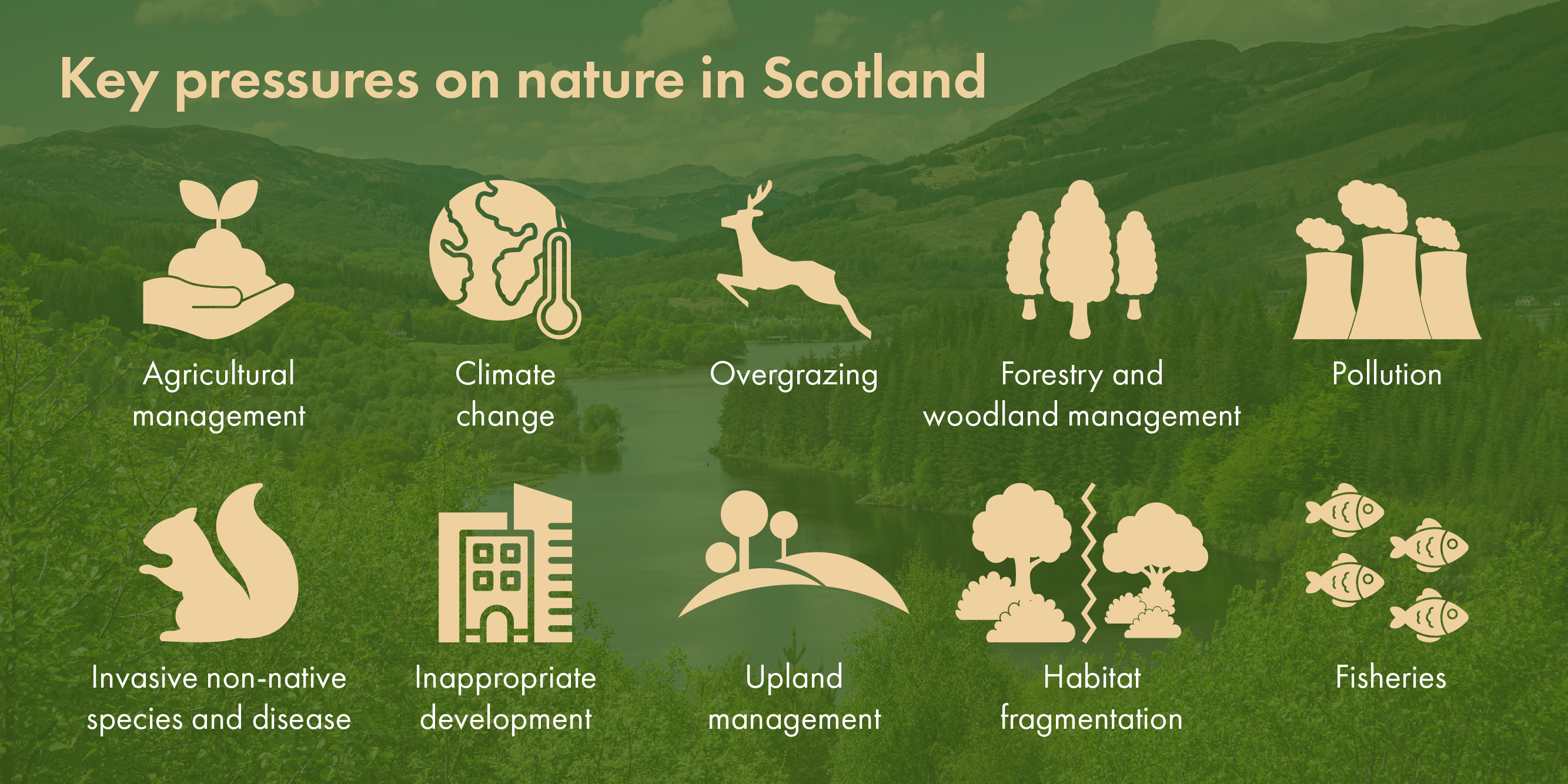
Image: Figure 41: Drivers of biodiversity loss in Scotland Source
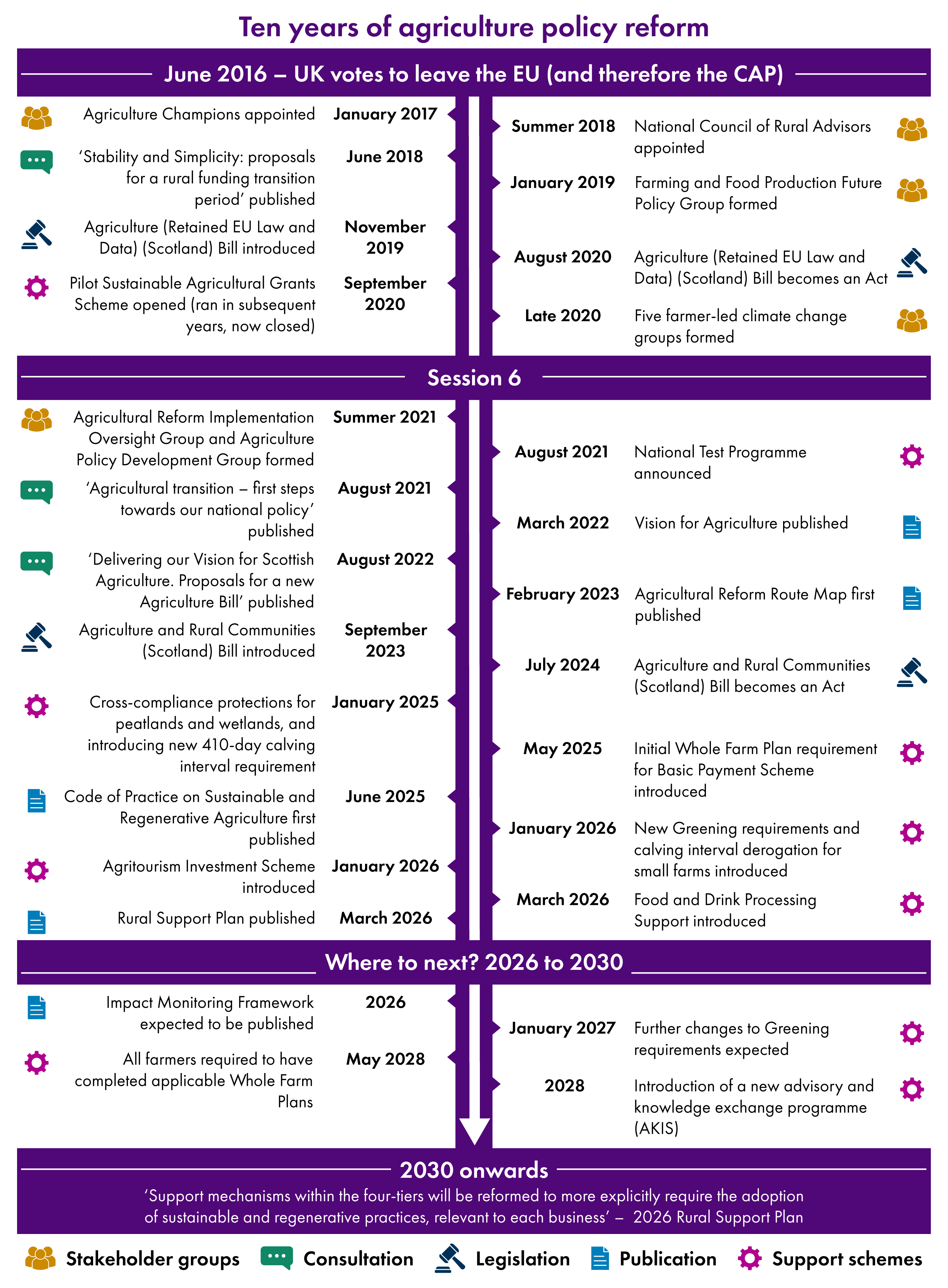
Image: Figure 43: Ten years of agricultural policy reform
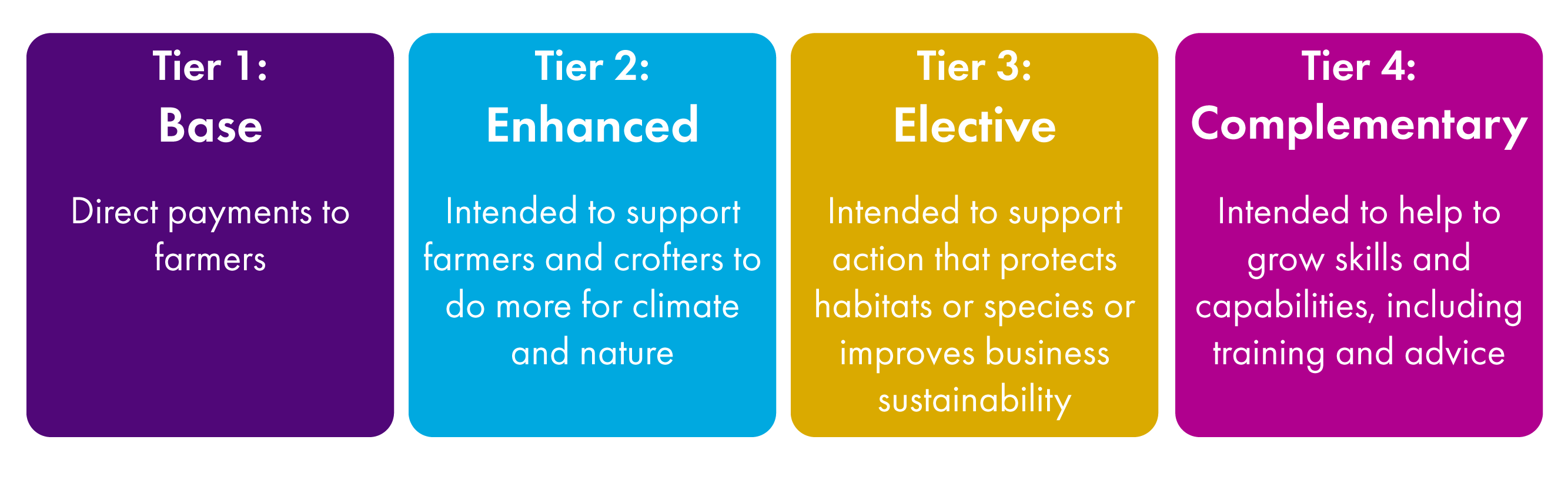
Image: Figure 44: The new four-tier policy framework
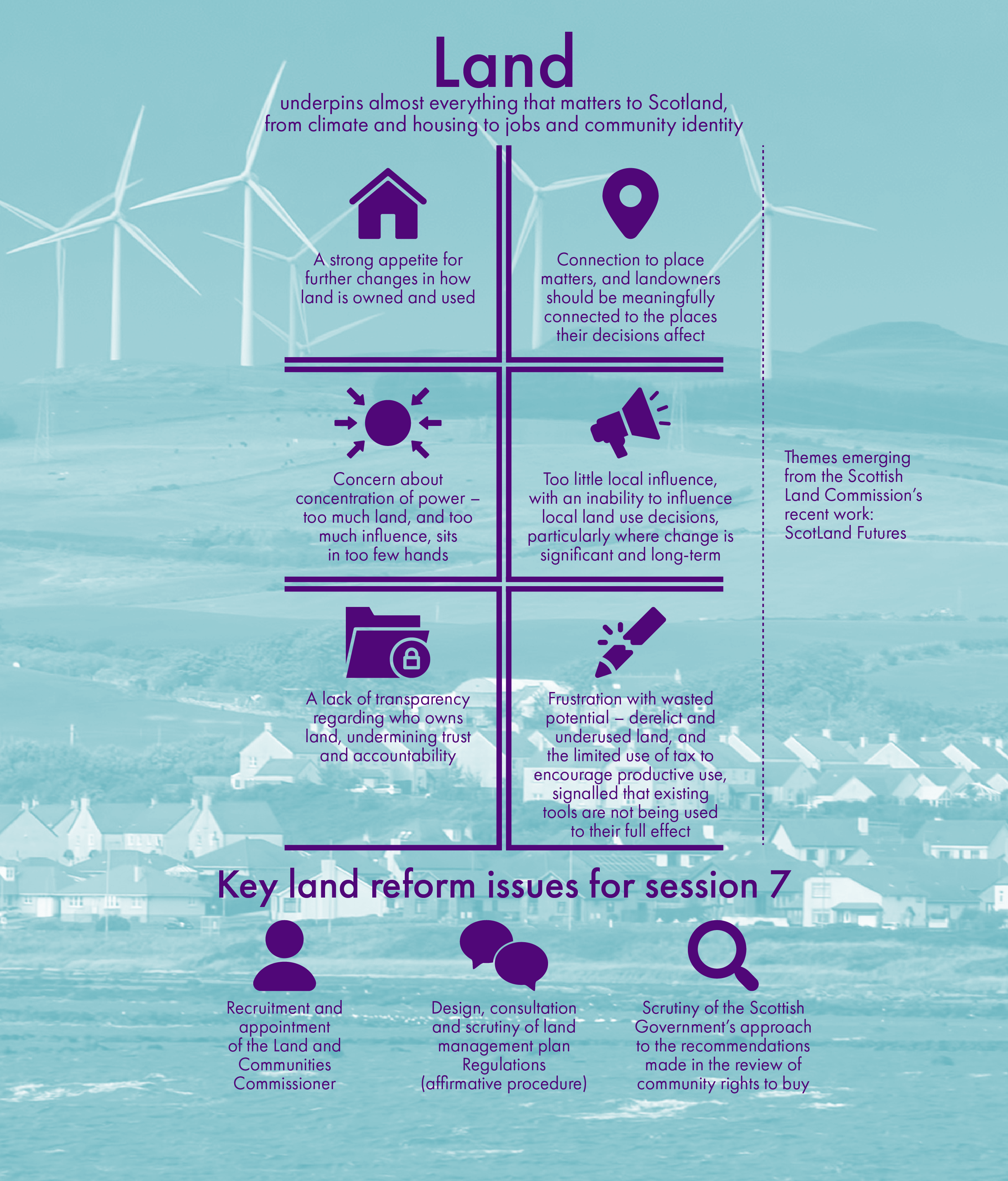
Image: Figure 45: Key themes and issues for session 7
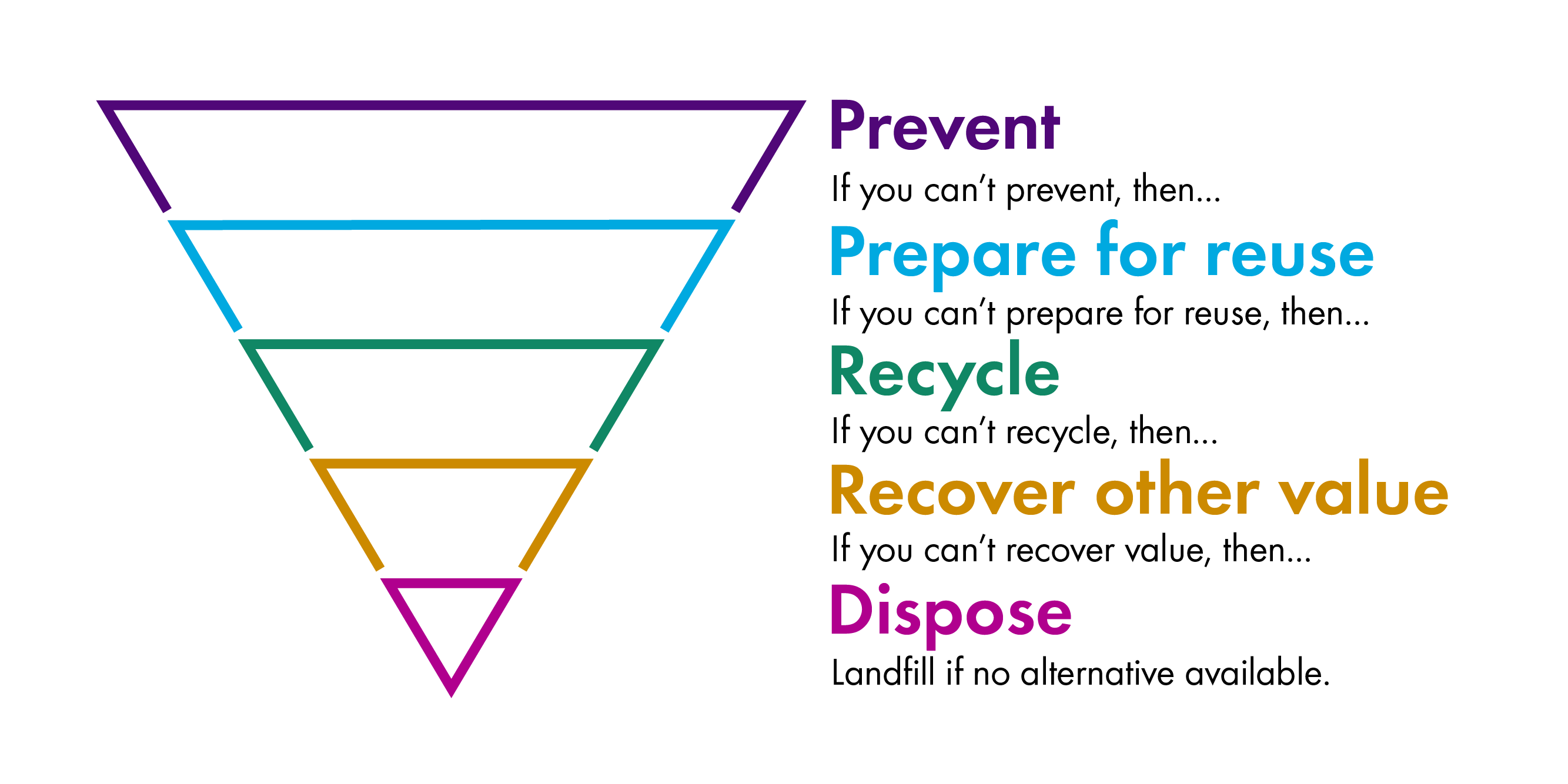
Image: Figure 46: The waste hierarchy
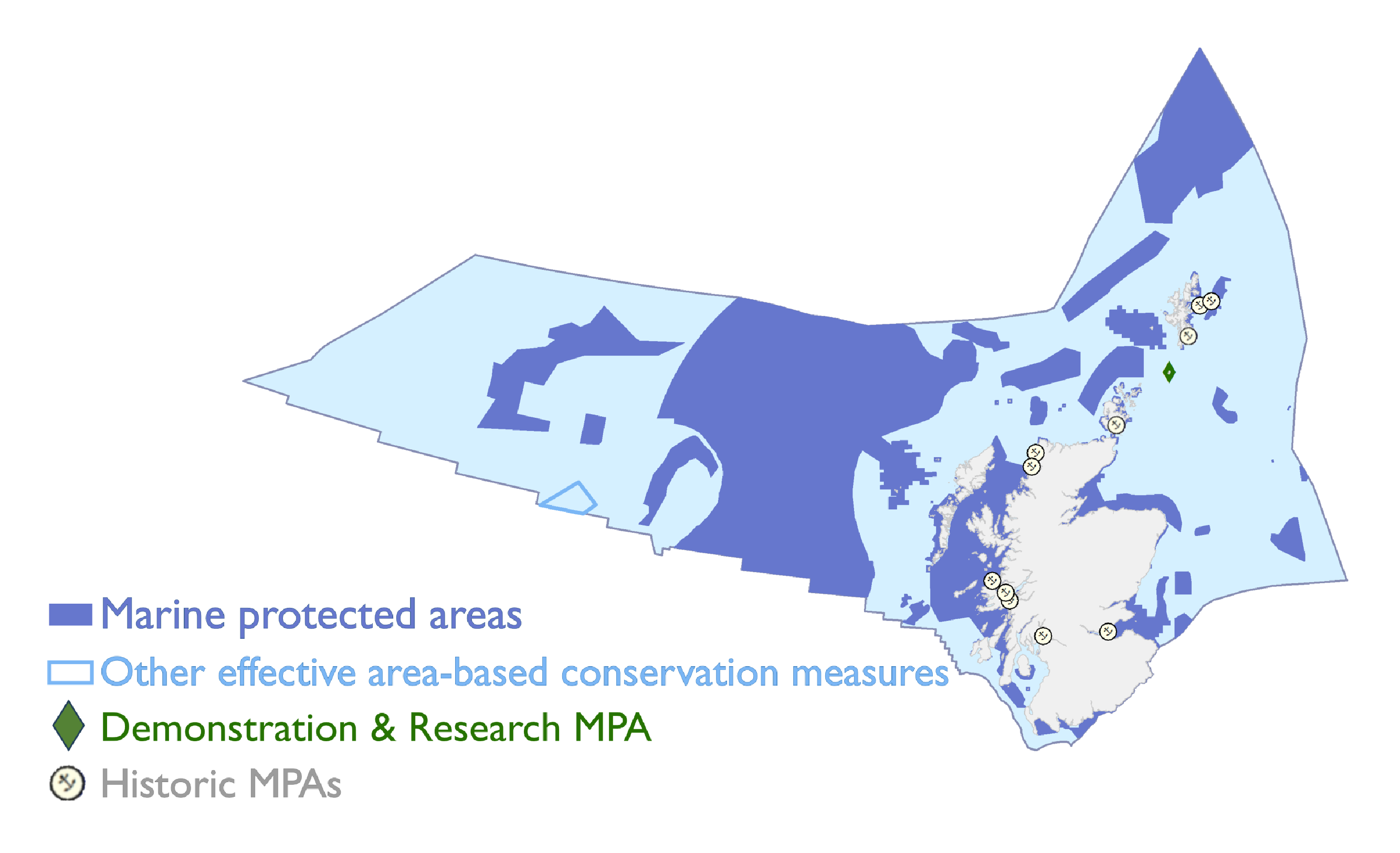
Image: Figure 47: Scotland’s Marine Protected Area Network
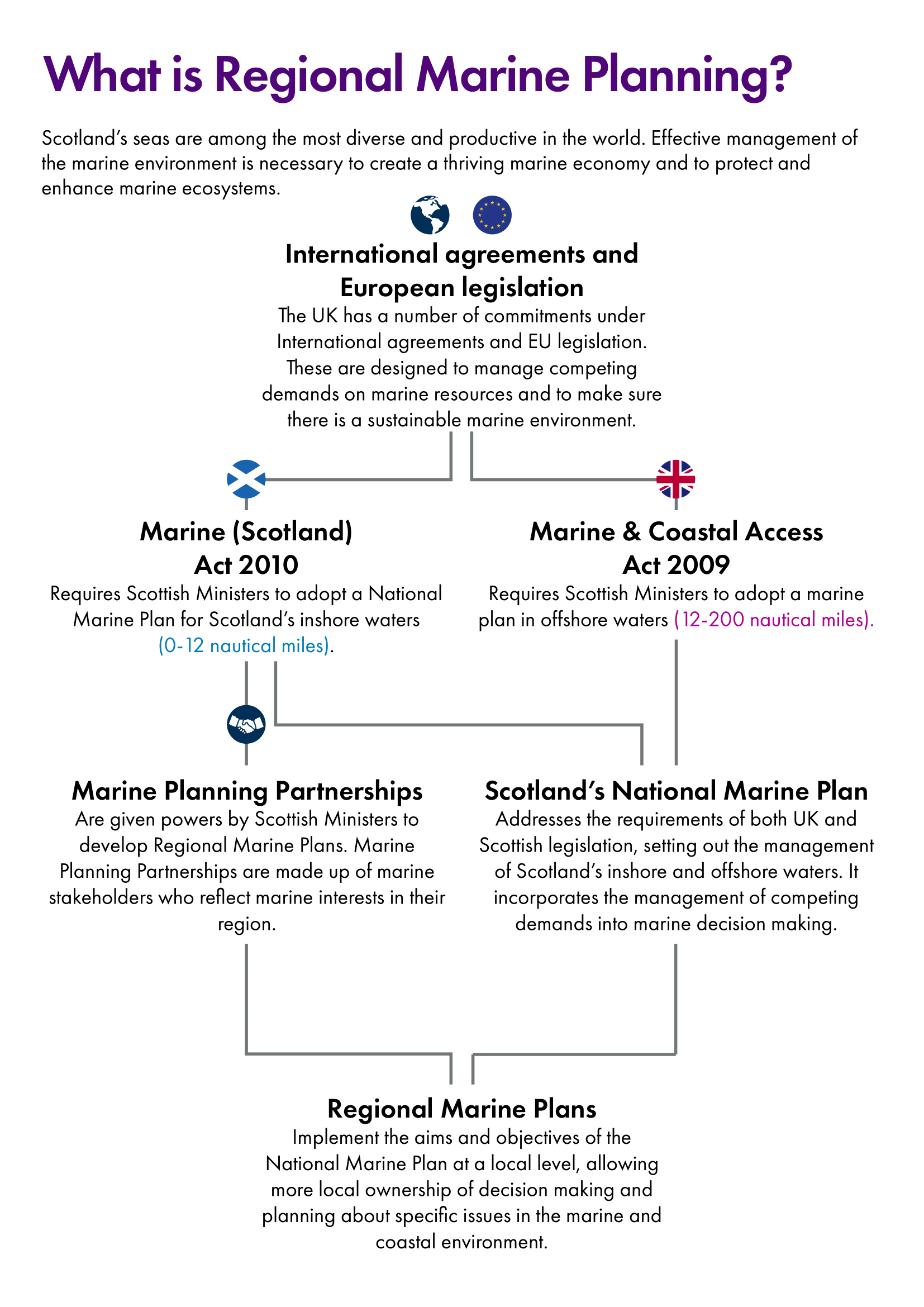
Image: Figure 48: What is Regional Marine Planning?
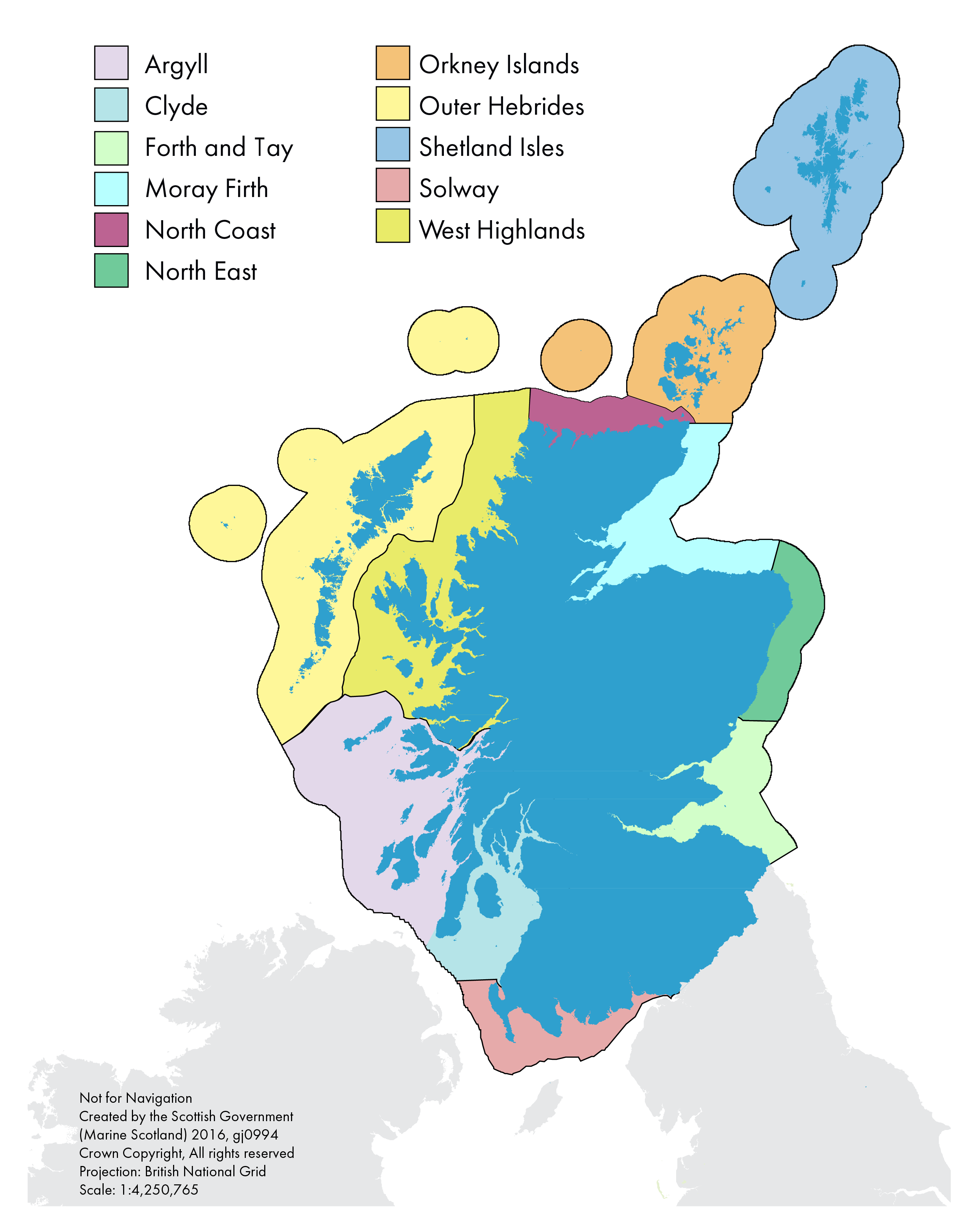
Image: Figure 49: Scottish Marine Regions
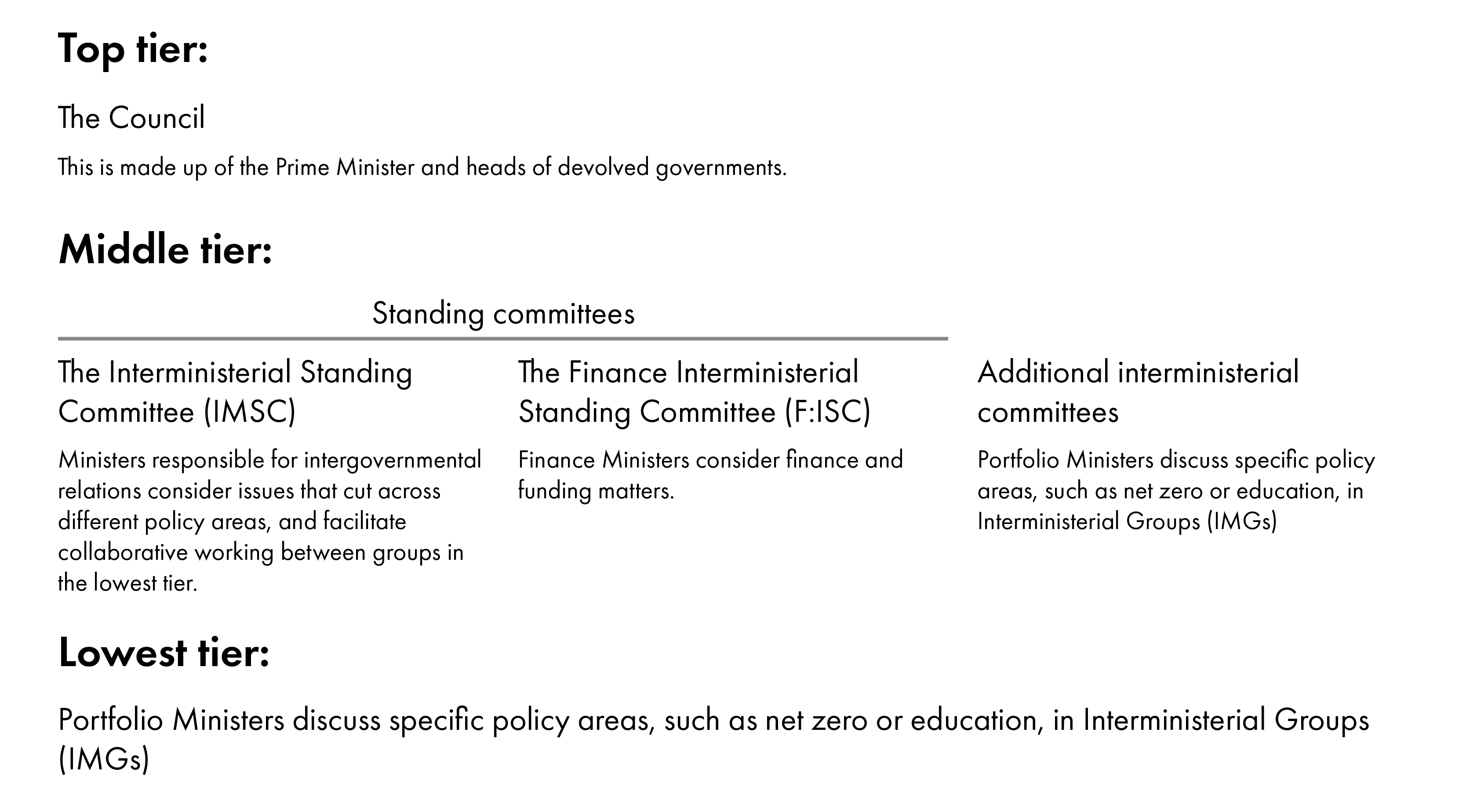
Image: Figure 50: The intergovernmental relations structure in the UK
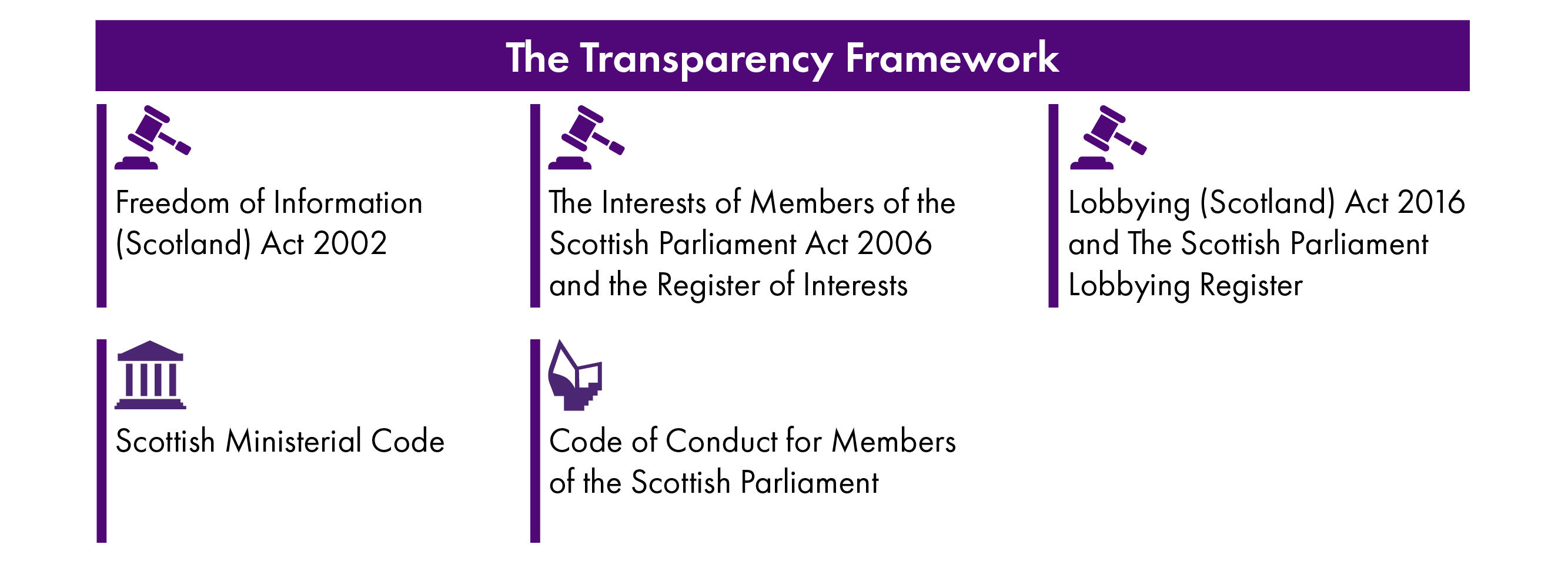
Image: Figure 51: Scotland's Transparency Framework
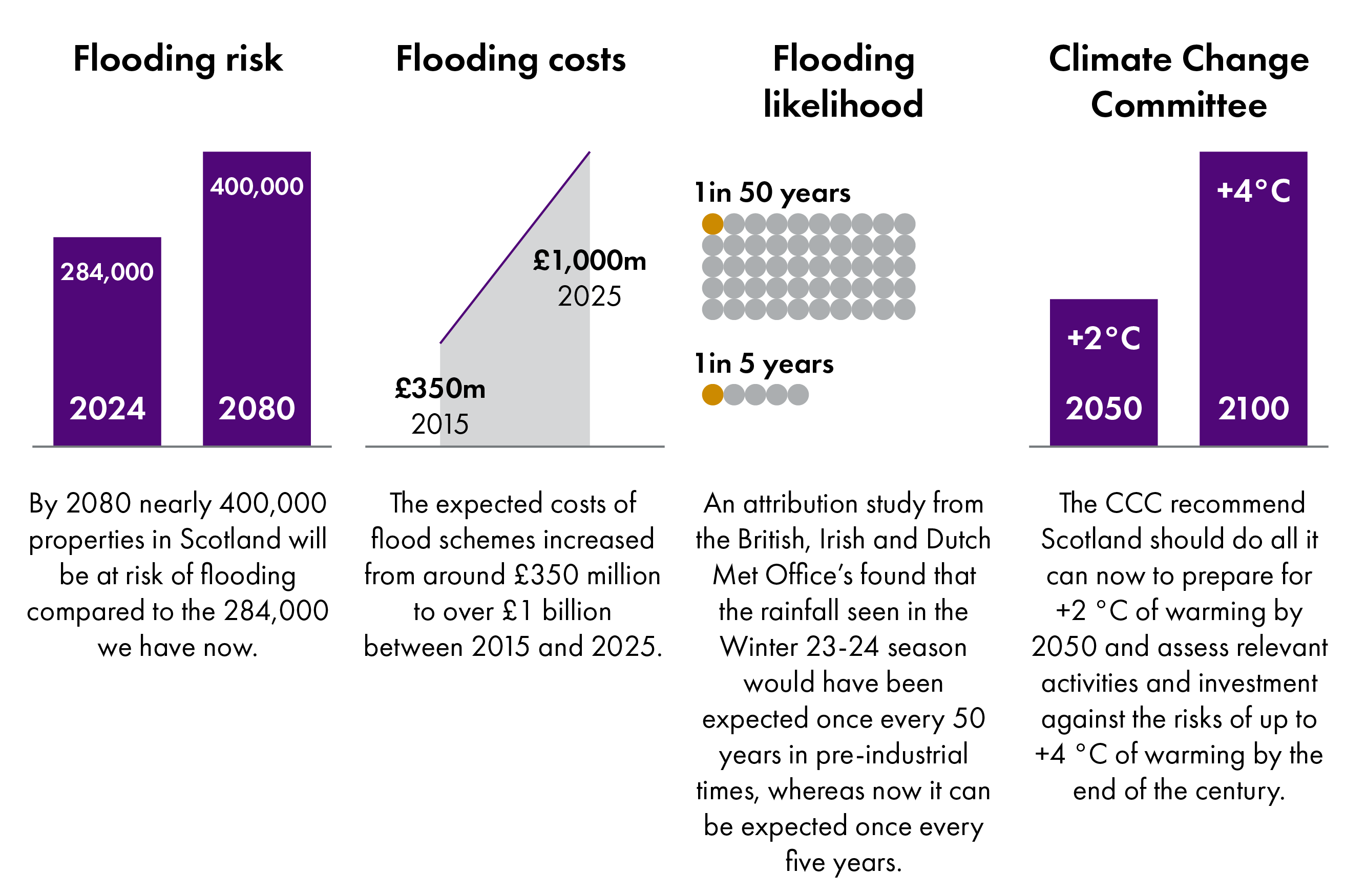
Image: Figure 39: Flooding issues for Session 7
prev
next
Last Updated: 11/7 10:59pm
An error occured while loading, please try again in a few minutes.
Refresh
BACK TO TOP